Why MacBooks Hold Their Value Better Than Windows Laptops
Long software support, durable build, ecosystem pull, and steady demand keep used MacBooks worth far more than Windows laptops.
Encore Editorial · Sep 27, 2026 · 6 min read
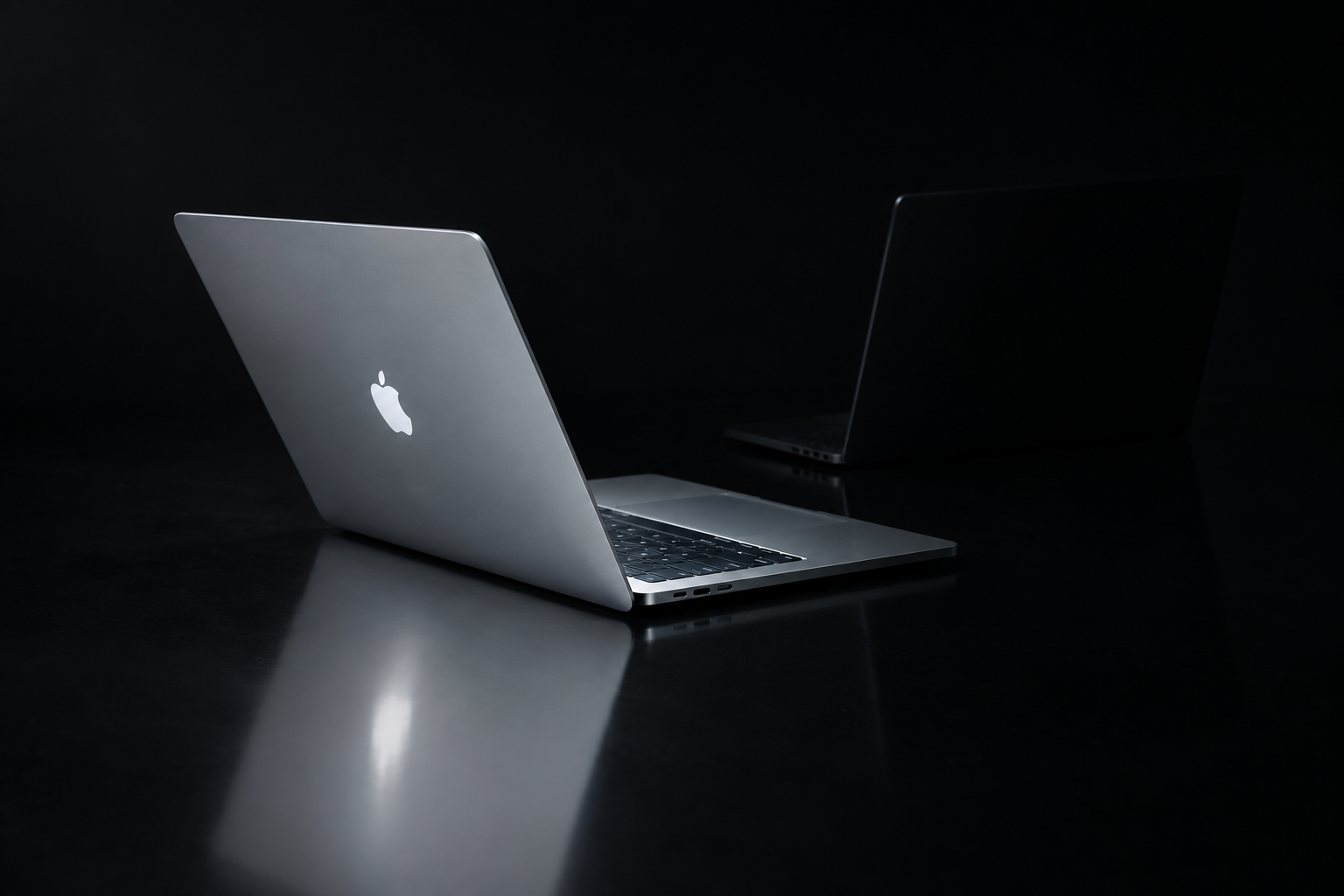
Ask anyone who has tried to resell a three-year-old Windows laptop and then a three-year-old MacBook, and the pattern is hard to miss: MacBooks hold their value far better than Windows laptops. It is one of the most consistent quirks of the personal-computer market, and it is not an accident. A mix of long software support, durable hardware, a sticky ecosystem, and steady secondhand demand keeps used Macs commanding prices that most Windows machines lose within a year or two of leaving the store.
That gap matters whether you are buying or selling. For buyers, it means a used Mac is a safer store of value than a cheaper Windows alternative. For owners, it means the machine you stopped thinking about is probably worth more than the calendar suggests. Here is why the difference is so durable.
Why MacBooks hold their value: software support outlasts the hardware
The single biggest reason MacBooks hold their value is how long Apple keeps them useful. As Macworld has laid out, Apple typically supports a Mac with new macOS releases for five to seven years, then follows with roughly two more years of security patches. That adds up to a realistic "lifespan of eight to 10 years for a laptop — good luck finding a PC that delivers that."
A computer that still runs current software and gets security fixes most of a decade later is a computer someone will still pay real money for. Windows laptops are not short on operating-system updates in theory, but the cheaper hardware they often ship on tends to feel dated long before the software stops working. Macworld argues the depreciation of Apple devices "is not nearly as high as with Windows PCs," precisely because the useful life runs longer.
The short version: A Mac stays supported, quick, and desirable for the better part of a decade, so its resale value falls slowly. Most Windows laptops feel old within a couple of years, and their prices reflect it.
Apple Silicon widened the gap
The move to Apple's own chips made an already-slow depreciation curve even flatter. M-series Macs run cooler, last far longer on battery, and stay fast under load, which is why they keep feeling current years after purchase. AppleInsider, in a buyer's guide, calls Apple Silicon Macs "the best choice for most buyers," noting they "will receive software support for many more years than Intel models," and summarizing bluntly that "even a five-year-old MacBook Air can still feel fast."
That longevity translates directly into resale strength. Writing for 9to5Mac, one editor explained choosing a five-year-old M1 MacBook Air over a new model because "any Apple Silicon MacBook Air is good enough" for writing, email, and browsing — and he could still buy the older machine for "just over half the price" of the newest one. When the used version of a laptop is genuinely good enough for most people, demand for it stays high, and high demand is what props up resale value.
Build quality, ecosystem, and steady demand
Software support explains most of the gap, but three other forces reinforce it.
- Build quality. Aluminum unibody construction ages better than the plastic and lower-cost components common in budget Windows machines. Macworld ties the lower long-term cost of Macs partly to the "inferior hardware quality that often accompanies low prices" on the PC side. A machine that still looks and feels solid after years of use is one buyers trust.
- Ecosystem gravity. Once someone owns an iPhone, an iPad, or an Apple Watch, a Mac slots neatly into the rest of their devices. That pull keeps a steady stream of buyers shopping specifically for Macs — new and used — which supports secondhand prices in a way no single Windows brand enjoys.
- Predictable demand. Because Apple sells relatively few, well-defined models each year, the used market is easy to shop and easy to price. A buyer knows exactly what an "M2 MacBook Air, 16GB" is. The fragmented Windows market, with countless configurations from many makers, makes any individual used PC harder to value — and harder to resell for much.
The unified-memory wrinkle that helps used Macs
There is one modern quirk of Apple Silicon that quietly boosts resale value: memory is soldered onto the chip and cannot be upgraded later. On paper that sounds like a downside, and for a new buyer it is a reason to spec carefully. But on the used market it works in the seller's favor. A Mac that was originally configured with 16GB or 32GB of memory carries that upgrade baked in permanently — a buyer gets the higher-memory machine without paying for a fresh configuration, so well-specced used Macs stay in strong demand. That is different from a Windows laptop, where a buyer can often add cheap RAM later and therefore won't pay a premium for it up front.
What this means for buyers and owners
If you are shopping, the practical takeaway is that a used Mac is one of the rare pieces of consumer technology that behaves a little like an asset rather than a pure expense. Buy one with enough memory for your needs, confirm it is Apple Silicon rather than Intel for the longest support window, and check that Activation Lock has been removed — AppleInsider flags that verification as essential before money changes hands.
If you already own a Mac, the same forces are quietly protecting your machine's worth. Because values fall so slowly, there is rarely a reason to panic-sell — but there is also no prize for letting a capable Mac gather dust while it slowly ages out. If you have upgraded and have a previous one sitting in a drawer, it is likely worth more than you would guess, and an instant offer takes about thirty seconds to confirm exactly how much.
The bottom line
MacBooks hold their value better than Windows laptops for reasons that compound on each other: they stay supported and fast for the better part of a decade, they are built to last, they anchor an ecosystem people keep buying into, and their tidy lineup makes the used market easy to shop. Windows laptops can be excellent tools, but few of them keep their price the way a Mac does. For buyers, that makes a used Mac a smart bet. For owners, it is a reminder that the value in your machine has not drained away nearly as fast as you might think.
Get an instant offer on your Mac
A real number in about 30 seconds — working or not. Free prepaid shipping, no seller fees, paid the day it arrives.*
Get my offerSources
More from Encore
 Value & Depreciation
Mac Studio vs Mac Pro: Which Holds Value Better?
Same silicon, very different depreciation: why the Mac Studio resells easily and the Mac Pro gives back more of its value.
Sep 27, 2026 · 6 min read
 Value & Depreciation
The iMac Pro: An Orphaned Powerhouse's Second Life
Discontinued, now Intel-sunset, still capable: who the iMac Pro is for in 2026 and how to value one.
Sep 27, 2026 · 6 min read
 Value & Depreciation
The MacBook Retina Era: What Still Has Value
As Golden Gate ends Intel support, here's which Retina MacBooks still sell and which have aged into donation territory.
Sep 27, 2026 · 6 min read