The iMac Pro: An Orphaned Powerhouse's Second Life
Discontinued, now Intel-sunset, still capable: who the iMac Pro is for in 2026 and how to value one.
Encore Editorial · Sep 27, 2026 · 6 min read
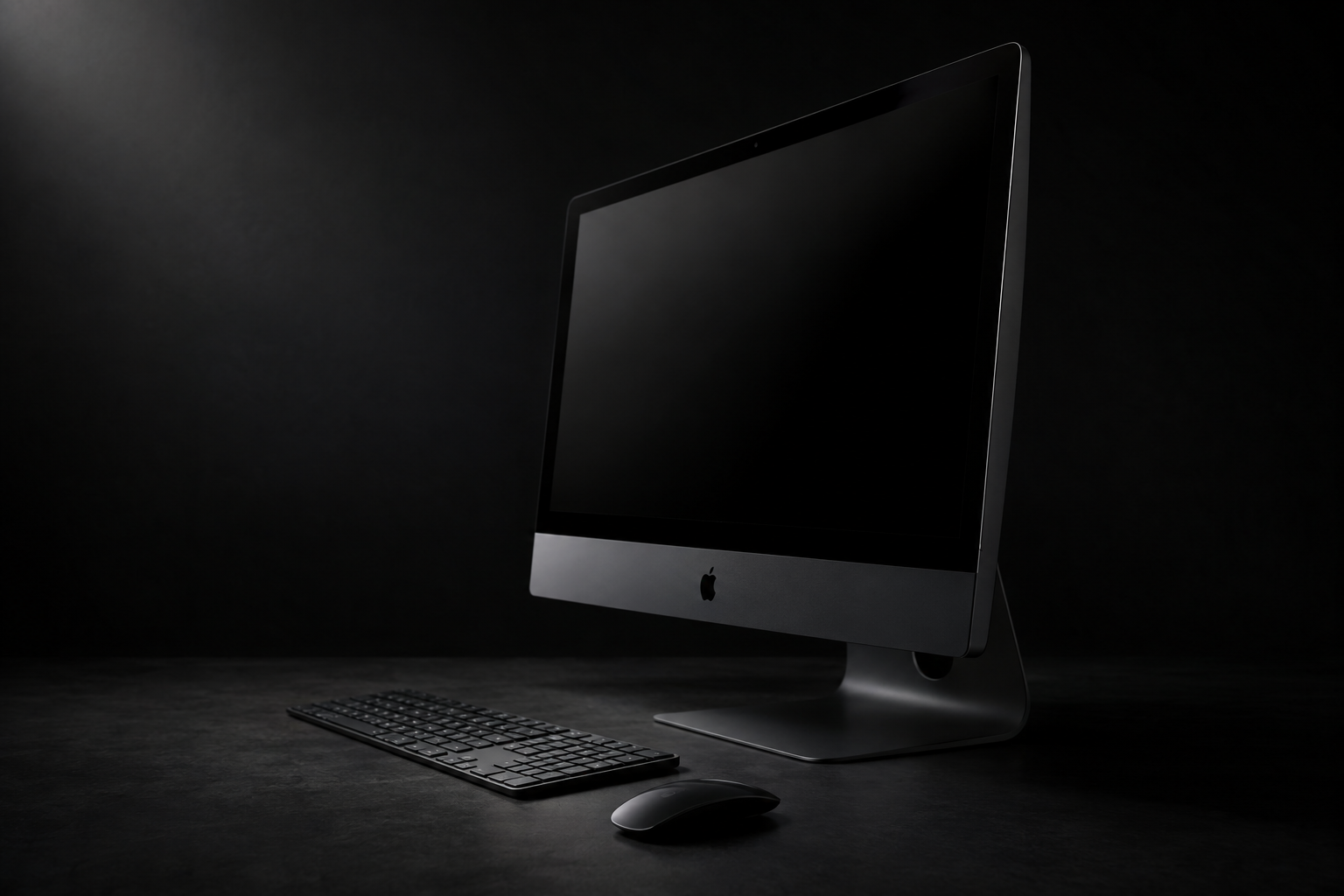
The iMac Pro was always a strange machine. Apple launched it in December 2017 as its most powerful all-in-one ever — a space-gray workstation with Intel Xeon chips and workstation cooling packed behind a 27-inch 5K display — and then quietly discontinued it a little over three years later. Today it occupies an odd place in the used market: an orphaned powerhouse that is still genuinely capable, but one that macOS 27 has just cut loose along with every other Intel Mac. If you own one, or you're eyeing one secondhand, the question is what an iMac Pro is actually good for in 2026.
How the iMac Pro became an orphan
The iMac Pro was born as a stopgap. As Jason Snell wrote at Six Colors, it was "built as the replacement for the Mac Pro, only to have the Mac Pro survive after all" — he called it "the ultimate pro Mac of an alternate timeline." Its defining traits were serious Intel Xeon processors and a cooling system Snell described as "powerful and quiet," which let pros run heavy workloads in near silence.
Apple pulled it in March 2021. As AppleInsider reported, the online store was reduced to a single "while supplies last" configuration — a 10-core Xeon W, 32GB of ECC memory, a 1TB SSD, and a Radeon Pro Vega 56 — after previously offering up to 18 cores, Vega 64 graphics, 4TB of storage, and as much as 256GB of RAM. One analyst quoted in that coverage described it as "a stopgap measure because of the Mac Pro 2019's lengthy development time," suggesting Apple "likely never intended it to be an ongoing product line."
The short version: The iMac Pro is a powerful, quiet Intel workstation with a beautiful 5K screen — but it is now cut off from new macOS, its RAM and storage are effectively fixed, and its value rests on the display and the niche buyers who still want it.
The software cliff just arrived
The iMac Pro's biggest problem is not performance — it is the calendar. macOS 27 "Golden Gate" shipped on September 14, 2026, and as MacRumors reported, it "is not compatible with any Macs with Intel processors, marking the end of an era." The iMac Pro's Xeon silicon puts it firmly on the wrong side of that line. Apple has said Intel Macs will keep receiving security updates for roughly three more years, and Golden Gate is the last release to bundle the full Rosetta 2 layer for running Intel apps — so the software runway is finite and visible.
That doesn't make the machine useless. It means the clock is running, and the honest way to think about an iMac Pro now is as a capable computer with a known expiration on new features rather than a long-term buy.
Who still wants an iMac Pro
Despite all of that, there is real demand for these machines, and it comes from specific corners:
- Studios that live in one app. A photographer or audio engineer whose workflow is locked to a mature Intel-native version of an app doesn't need Golden Gate. For them, a quiet 10-core Xeon and a color-accurate 5K panel is still a strong desktop.
- Buyers who want the display included. The 27-inch 5K screen is the same panel people paid a premium for as a standalone monitor. An iMac Pro is, in effect, that display with a workstation attached.
- Home labs and secondary machines. As a render node, a media server, or a second workstation that rarely touches the internet, the security-update clock matters far less.
- Tinkerers. Once macOS support fully lapses, a Xeon-class machine with heavy RAM makes a capable Linux or virtualization box.
The upgrade trap that hurts resale
One detail shapes iMac Pro values more than any other: it is nearly impossible to service. The RAM is technically socketed but sits behind a soldered, glued display that has to be cut open to reach, and the SSD is a proprietary, non-standard module. In practice, most owners treat the configuration they bought as permanent.
That cuts two ways in the used market. A base 32GB unit can't be cheaply bumped up, which caps its appeal for demanding work. But a machine that was originally ordered with generous RAM and storage carries that expensive spec permanently — and a well-configured iMac Pro is worth meaningfully more than an entry unit, because the buyer knows they're getting a spec they can't add later. When you're valuing one, the original build matters as much as the condition.
Sell, keep, or repurpose?
For most owners, the decision comes down to whether the machine still fits a real workflow. A few guidelines:
- If it's central to paid work and your apps still run natively, keep it and plan a migration over the next couple of years while security updates last.
- If it's mostly idle, this is a reasonable moment to move it while Intel workstation demand still exists — values on orphaned pro hardware tend to soften as the software window narrows.
- If it's damaged — a dead GPU, a cracked panel, a failed logic board — don't assume it's scrap. These machines have real parts value and a refurbish market, so a broken iMac Pro is often still worth something. The quickest way to find out is to get a real offer in about thirty seconds rather than guess.
Whatever you decide, wipe it properly first: sign out of your Apple ID, disable Find My, and erase the drive before it leaves your hands.
The bottom line
The iMac Pro was Apple's ultimate pro Mac from a timeline that never happened, and it has aged into exactly the kind of orphan that description implies — powerful, quiet, beautiful to look at, and now sealed off from new macOS. Its second life belongs to single-app studios, display-hungry buyers, and tinkerers who don't care about the update clock. For everyone else, its value is real but finite, and it makes the most sense to move it while the market for Intel workstations is still awake.
Get an instant offer on your Mac
A real number in about 30 seconds — working or not. Free prepaid shipping, no seller fees, paid the day it arrives.*
Get my offerSources
More from Encore
 Value & Depreciation
Why MacBooks Hold Their Value Better Than Windows Laptops
Long software support, durable build, ecosystem pull, and steady demand keep used MacBooks worth far more than Windows laptops.
Sep 27, 2026 · 6 min read
 Value & Depreciation
Mac Studio vs Mac Pro: Which Holds Value Better?
Same silicon, very different depreciation: why the Mac Studio resells easily and the Mac Pro gives back more of its value.
Sep 27, 2026 · 6 min read
 Value & Depreciation
The MacBook Retina Era: What Still Has Value
As Golden Gate ends Intel support, here's which Retina MacBooks still sell and which have aged into donation territory.
Sep 27, 2026 · 6 min read