What's My MacBook Air Worth in 2026?
Real used MacBook Air prices in 2026, from the Intel era to the M4 — and the chip, RAM, and condition details that decide the number.
Encore Editorial · Sep 5, 2026 · 7 min read
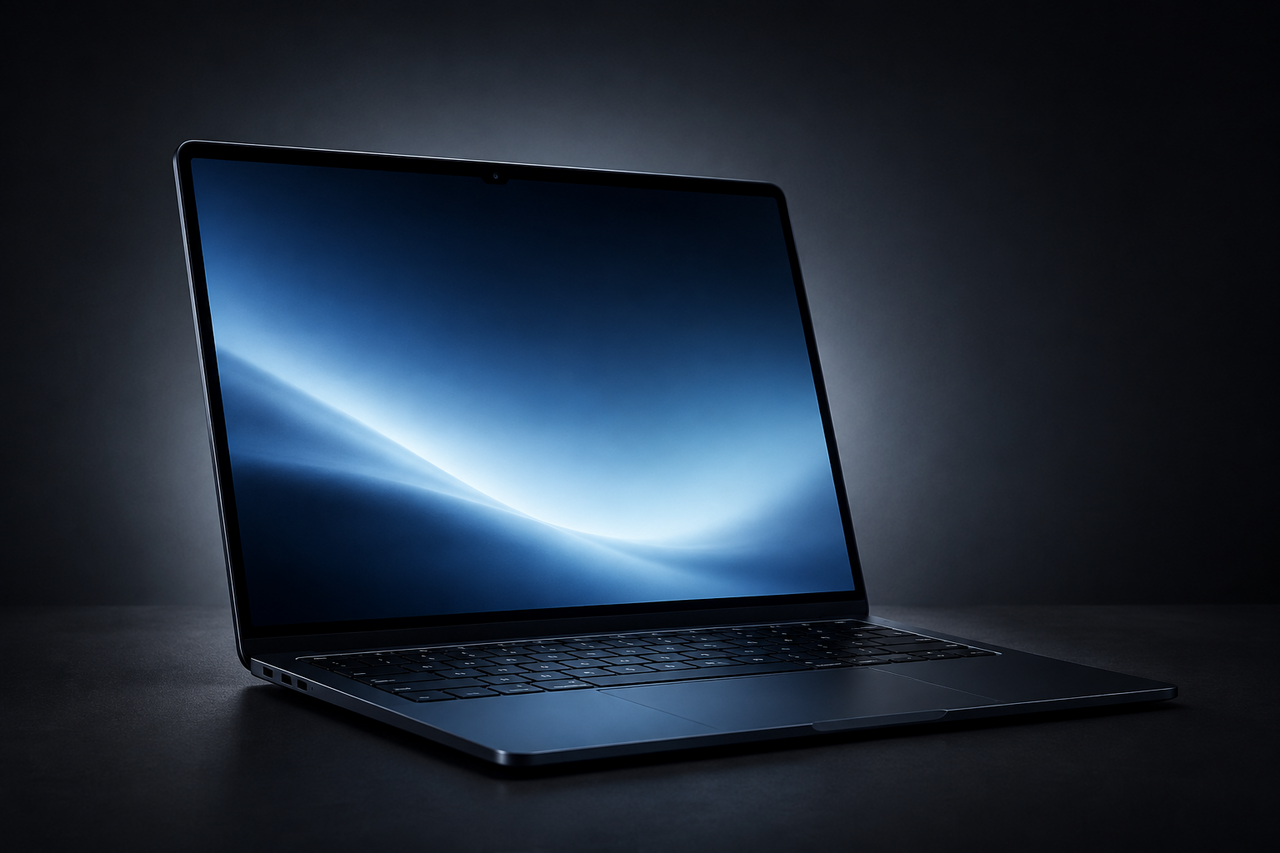
If you're wondering what your MacBook Air is worth in 2026, the honest answer is a range, not a number — and where you land inside that range depends on a handful of things you can check in about a minute. Which chip is inside, how much memory it has, the storage tier, the size of the screen, and how healthy the battery is will move the price more than almost anything else. The good news for owners: the Air has held its value unusually well, and some models are aging far more gracefully than a laptop that old has any right to.
Here's a realistic look at what each generation of MacBook Air is actually selling for right now, and what pushes your particular machine toward the top or bottom of its band.
What a MacBook Air is worth in 2026, by generation
Used prices vary by day and by condition, but the current market is well-mapped. Drawing on real sold-price tracking from ValueSnap's 2026 resale survey, here is roughly how the generations stack up:
- Intel MacBook Air (2019 and earlier): the bottom of the market. These have kept only 20–30% of their original price, and they depreciate faster than Apple Silicon — roughly 25–35% a year. macOS support is running out, which is the main drag.
- M1 Air (2020): holding 50–60% of retail, a remarkable figure for its age. It's widely regarded as the best-value used Mac you can buy — more on why below.
- M2 Air (2022–2023): a clear step up from the M1, with the 16GB configurations commanding a solid premium over the base 8GB. The 15-inch M2 sits higher still.
- M3 Air (2024): still holding an impressive 80–85% of its original price for a base 13-inch. The 15-inch typically carries a meaningful premium over the 13-inch.
- M4 Air (2025): the newest generation depreciates least of all. Because Apple launched it at an aggressive price and started it at 16GB of memory, used units stay close to new pricing.
The quick math: Apple Silicon MacBook Airs lose roughly 15–20% of their value per year; Intel models lose 25–35%. A three-year-old M-series Air is often still worth more than half what you paid — which is remarkable for a laptop.
Why the M1 Air refuses to depreciate
The 2020 M1 Air is the outlier of the whole lineup. It was the first Mac to ship on Apple Silicon, and five-plus years later it still runs the current macOS, handles everyday work without breaking a sweat, and stays fanless and silent doing it. That combination created a floor under its resale value that older Intel machines never had.
Buyers can pick one up confidently for everyday use, and the demand side of that is exactly what keeps prices firm. When a five-year-old laptop is still genuinely useful — not merely functional — plenty of people would rather pay for a known-good one than spend more on something newer. That steady demand is why the M1 has kept 50–60% of its value while comparable Windows laptops from 2020 are worth a fraction of that.
The five things that decide your number
1. The chip
This is the single biggest lever. Every step up the ladder — M1 to M2 to M3 to M4 — adds a clear increment to the price, and it's also the line between "still supported for years" and "on the way out." The Intel-to-M1 jump is the steepest cliff in the entire used Mac market.
2. Memory (and why you can't fix it later)
Apple Silicon uses unified memory soldered onto the chip package, so whatever you bought at checkout is permanent — you cannot upgrade it. That makes RAM a durable value driver on the used market. A 16GB Air typically sells for a solid premium over the otherwise-identical 8GB version, and 16GB is now widely regarded as the recommended minimum for most buyers in 2026, since 8GB can feel constrained with future macOS updates. If your Air has 16GB or more, lead with that.
3. Storage
Also soldered, also permanent. Jumping from 256GB to 1TB adds a meaningful amount to resale value. A 256GB machine is the entry point; 512GB and up command a premium because buyers know they can't add an SSD down the line.
4. Screen size
The 15-inch Air, introduced with the M2 generation, consistently fetches a clear premium over the 13-inch of the same year. It's the machine people buy when they want a bigger display without paying the MacBook Pro premium — and that demand carries into the used market.
5. Condition and battery health
Apple designs these batteries for about 1,000 charge cycles before macOS flags them "Service Recommended," and cycle count is one of the first things a serious buyer checks. Low cycles, a clean screen, tidy chassis corners, and the original charger in the box all nudge you toward the top of the range. You can see your own count under System Settings › Battery › Battery Health. Color matters far less — though the newer Sky Blue and Midnight finishes on recent Airs are mildly sought-after.
Read the market before you decide
One dynamic worth understanding: new Air pricing anchors used pricing. When Apple shipped the M4 Air as "more power for less money," in XDA's words, it quietly reset expectations for everything below it. And discounts on current models ripple downward — when the still-excellent M4 Air turns up heavily discounted against a newer M5, used M2 and M3 prices feel the pull too. The practical takeaway: check what the generation above yours is selling for new before you settle on a number.
Not sure where your Air lands? The fastest way to turn all of this into a real figure is to get an instant offer on your MacBook Air — it takes about 30 seconds, and it prices in your exact chip, memory, storage, and condition for you.
The bottom line
A MacBook Air is one of the better value-holding laptops you can own. An Intel model is worth modest money and getting less by the month, so if you have one gathering dust, sooner is better than later. An M1 through M4 Air, by contrast, is likely worth more than the "it's a few years old" math in your head suggests — especially with 16GB of memory, roomy storage, and a healthy battery. Check those four things, compare against the generations above, and you'll know your number before you even list it. And if the machine has been sitting in a drawer, remember that a Mac loses value every quarter it waits — the offer today is almost always better than the offer next year.
Get an instant offer on your Mac
A real number in about 30 seconds — working or not. Free prepaid shipping, no seller fees, paid the day it arrives.*
Get my offerSources
- ValueSnap — MacBook Resale Value by Year (2026): Real Sold Prices
- Apple Newsroom — Apple introduces the new MacBook Air with the M4 chip and a sky blue color
- XDA — MacBook Air (M4, 2025) review: More power for less money
- TechRadar — The new MacBook Air 15 M5 is great, but it's hard to justify when the still-excellent M4 model is heavily discounted
More from Encore
 Value & Depreciation
Why MacBooks Hold Their Value Better Than Windows Laptops
Long software support, durable build, ecosystem pull, and steady demand keep used MacBooks worth far more than Windows laptops.
Sep 27, 2026 · 6 min read
 Value & Depreciation
Mac Studio vs Mac Pro: Which Holds Value Better?
Same silicon, very different depreciation: why the Mac Studio resells easily and the Mac Pro gives back more of its value.
Sep 27, 2026 · 6 min read
 Value & Depreciation
The iMac Pro: An Orphaned Powerhouse's Second Life
Discontinued, now Intel-sunset, still capable: who the iMac Pro is for in 2026 and how to value one.
Sep 27, 2026 · 6 min read