Mac Studio Resale: Why Pros Pay a Premium Used
Why the Mac Studio holds value better than almost any Mac — and what a used M1, M2, M3, or M4 model is really worth in 2026.
Encore Editorial · Sep 6, 2026 · 6 min read
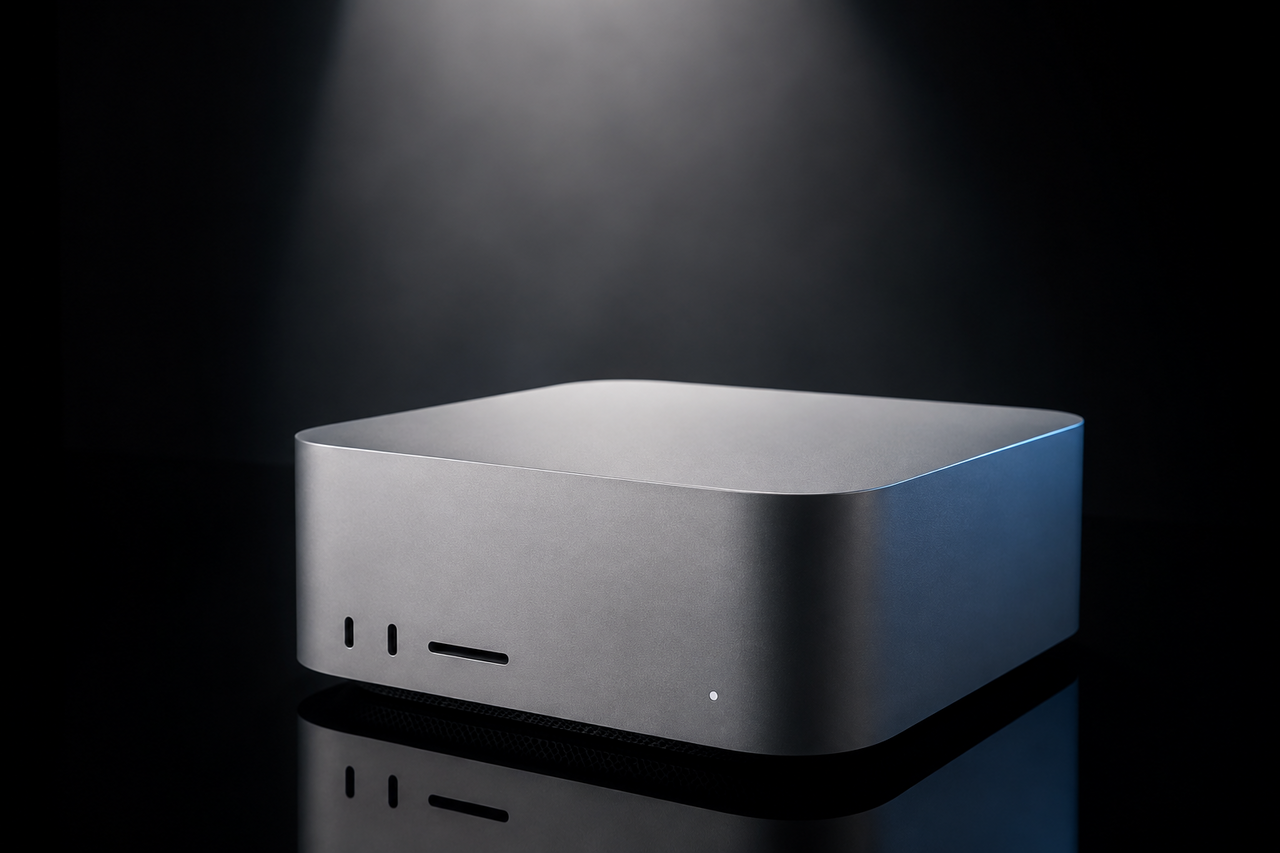
Most computers lose value the moment you carry them out of the store. The Mac Studio resale market breaks that rule in a way that surprises people. A three-year-old M1 Max still clears strong money, and a maxed-out Ultra can trade used for more than most people spend on a new laptop. The reason is not nostalgia — it is that the professionals who buy these machines used are paying a premium on purpose, and understanding why explains what your own Studio is worth today.
The short answer: the Mac Studio holds value because the things that make it expensive new — enormous unified memory, Ultra-class silicon, huge SSDs — are exactly the things you cannot add later, and cannot easily buy new right now. That scarcity flows straight into the secondhand price.
What a used Mac Studio actually sells for in 2026
Start with the real market. On the used market, the original 2022 model (M1 Max and M1 Ultra) still commands strong money, with averages that hold a large fraction of the original sticker across configurations. Broken out by chip and storage as of early September 2026, here is how the builds stack up against one another:
- M1 Max, 512GB — the entry point of the used Studio market
- M1 Max, 1TB — a touch above the 512GB Max
- M1 Ultra, 1TB — a large jump over any M1 Max
- M1 Ultra, 2TB — higher still, well into premium territory
- M1 Ultra, 4TB — among the very top of the M1-era configurations
Sit with that for a second. A machine that launched in March 2022 — four generations of Apple Silicon ago — is still returning a third to half of its original sticker on the used market. That is not how a four-year-old PC behaves.
The current generation holds even more firmly. Resale trackers for the 2025 Mac Studio (M4 Max and M3 Ultra) show M4 Max units climbing steadily with storage, and 16-core/1TB configurations sitting well above the base. The M3 Ultra models — which ship new starting at 96GB of memory — routinely change hands used at the very top of the Mac desktop market once you climb into 32-core GPU and multi-terabyte storage territory. On the highest-memory, highest-storage builds, used prices can actually approach or exceed the original configured price, because those exact builds are nearly impossible to walk in and buy.
The pattern that matters: the more RAM and the bigger the SSD, the better a Mac Studio holds its value used — because that spec is fixed for life and can't be bought cheaply after the fact.
Why pros pay a premium for a used Studio
The Mac Studio exists for a specific customer: the video editor, 3D artist, photographer, or ML engineer who needs desktop-class throughput and a lot of memory in a box that fits under a monitor. Engadget's review of the M4 Max model called it "the Mac of choice" for power users doing 4K and 8K video or game design, and noted it was "even a decent deal by Apple's standards" — high praise for a company not known for value pricing (Engadget).
Those buyers care about two numbers above all: unified memory and GPU cores. And here is the structural quirk that props up resale — unified memory is soldered onto the chip package. You choose it at checkout and you live with it forever. There is no aftermarket RAM upgrade for any Apple Silicon Mac. So a buyer who needs 64GB, 128GB, or the M3 Ultra's 512GB ceiling for local large-language-model work has exactly two options: pay Apple's steep new-config premium, or find a used one. The used one is cheaper — but not by as much as you'd expect, because demand is deep and supply is thin.
The memory-shortage backdrop
That thin supply got thinner in 2026. A global memory shortage pushed DRAM prices up sharply and made high-RAM Macs genuinely hard to buy new — at points, certain high-memory Studio configurations were pulled from sale entirely. On the MacRumors forums, owners of 128GB M2 Ultra machines discussed the moment bluntly: "you literally can't buy one right now," one wrote, arguing the best resale window lasts only until stock returns to the Apple Store. Others cautioned that memory costs weren't falling anytime soon — "at least another year" — which keeps a floor under used prices even as newer models ship.
The takeaway for an owner is unusual: a high-memory Mac Studio may be worth close to what you paid, and the window where that's true is defined by when new supply catches up. If you own one you're no longer using, it's a rare moment to see what it's worth as-is rather than let it depreciate on a shelf.
What drives your specific number
Two Mac Studios from the same year can be worth wildly different amounts. The variables, roughly in order of impact:
- Chip tier. Ultra outsells Max at resale by a wide margin — an M1 Ultra clears a substantial premium over an M1 Max of the same storage. The Ultra's extra GPU cores and memory bandwidth are the whole point.
- Unified memory. The single biggest swing after chip tier. 64GB, 96GB, and 128GB configs are the ones pros hunt for, and they hold value hardest.
- SSD capacity. Apple's storage upgrades are expensive new, so big SSDs carry real weight used — a 2TB or 4TB Studio can sell for well above a 512GB version of the same chip.
- Generation. Newer helps, but less than you'd think here. The M1 Ultra's staying power shows how slowly these machines actually age for real work.
- Condition. Desktops live easier lives than laptops — no hinge wear, no battery cycles — so a clean, boxed Studio with no dents commands the top of its range.
Notice what's missing from the top of that list: age. A well-specced older Studio routinely beats a base-config newer one. That inversion is the clearest signal that spec, not model year, is what this market rewards.
The bottom line on Mac Studio resale
The Mac Studio holds value because it was built for people who can't easily settle for less machine — and because the two specs they care most about, memory and storage, are locked in at purchase and impossible to add later. That makes a used high-memory Studio a legitimately scarce good, and scarce goods hold their price. Layer the 2026 memory shortage on top and the effect is amplified: high-RAM configurations are trading unusually close to new.
If you own a Studio you've outgrown or replaced, that's worth knowing before you decide to keep it "just in case." The specs that made it expensive are still working in your favor, and an instant offer takes about 30 seconds to find out exactly how much. Markets this firm don't usually last past the next supply cycle.
Get an instant offer on your Mac
A real number in about 30 seconds — working or not. Free prepaid shipping, no seller fees, paid the day it arrives.*
Get my offerSources
More from Encore
 Value & Depreciation
Why MacBooks Hold Their Value Better Than Windows Laptops
Long software support, durable build, ecosystem pull, and steady demand keep used MacBooks worth far more than Windows laptops.
Sep 27, 2026 · 6 min read
 Value & Depreciation
Mac Studio vs Mac Pro: Which Holds Value Better?
Same silicon, very different depreciation: why the Mac Studio resells easily and the Mac Pro gives back more of its value.
Sep 27, 2026 · 6 min read
 Value & Depreciation
The iMac Pro: An Orphaned Powerhouse's Second Life
Discontinued, now Intel-sunset, still capable: who the iMac Pro is for in 2026 and how to value one.
Sep 27, 2026 · 6 min read