Does Keeping Your Mac's Original Box Actually Add Value?
The original box helps a used Mac sell, but the charger and the machine's condition move the price far more. An honest breakdown.
Encore Editorial · Sep 23, 2026 · 6 min read
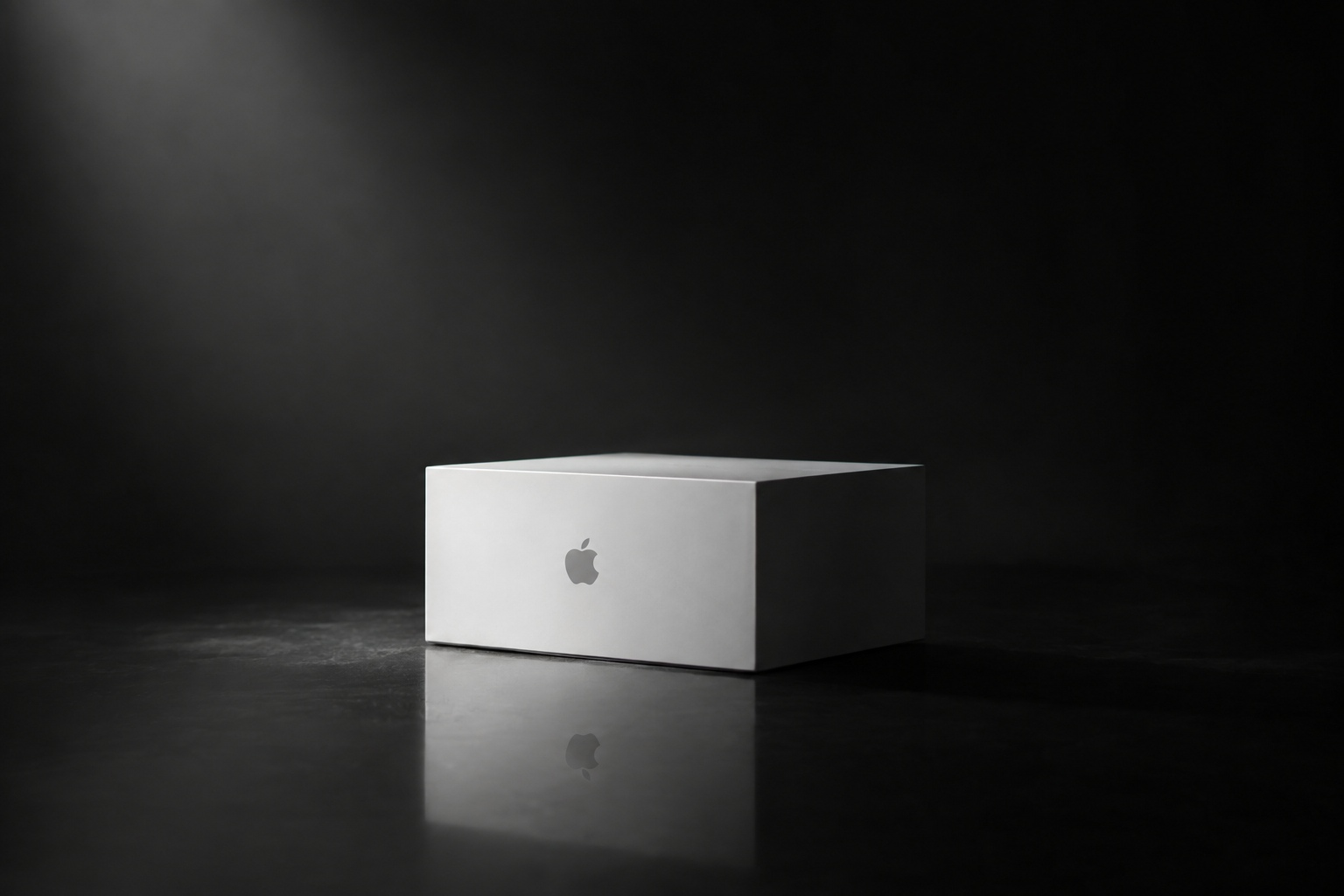
Somewhere in most Mac owners' closets is a flat white box, saved on the theory that keeping the original box will pay off someday. It is a reasonable instinct, and it is also a little overstated. The original box does add value when you go to sell a Mac, but it adds less than most people assume — and far less than a couple of other things you probably already have in a drawer. Here is an honest look at what the packaging is actually worth, and where your saved-everything energy is better spent.
Why the original box helps at all
The box does two jobs at resale, and only one of them is emotional. The practical job is protection: a factory box is molded to the machine, so it doubles as a ready-made shipping container. Consumer Reports notes that for premium electronics "the packaging is almost part of the product," and that keeping it spares you the cost and hassle of sourcing a proper shipping box later — a point it makes explicitly for laptops, where a padded shipping box is neither free nor trivial to find. BGR makes the same case, observing that original packaging for laptops and components lets you skip buying a shipping box during a move, and that for some hardware categories a complete box even commands a measurable markup on the used market, citing a 5–10% premium on used GPUs sold boxed.
The second job is signaling. A buyer looking at two otherwise identical listings tends to read "comes with original box" as shorthand for "this person took care of the thing." Consumer Reports frames the box as raising an item's market appeal and, within the return window, as sometimes required to send a device back at all. None of that is nothing. But notice what it is: the box is a trust and convenience signal layered on top of the machine, not a component of the machine.
The short version: The original box adds a modest resale premium and some buyer confidence, but it is mostly a signaling and shipping convenience. The original charger and a clean, working machine move the number far more than the cardboard does.
The charger matters more than the box
If you kept exactly one thing from the purchase, keep the power adapter, not the box. On modern Macs the charger is not a generic accessory — wattage is matched to the machine, and a replacement that is under-spec will charge slowly or not at all under load. AppleInsider's used-Mac guide puts it plainly: "The right power adapter matters more than people think, especially on USB-C models that require specific wattage," noting that a 16-inch MacBook Pro needs a higher-wattage brick than a MacBook Air, and that a buyer facing a listing without the original charger has to price in a replacement. That is a real cost a buyer subtracts, which means it is a real amount a complete listing keeps. The box, by contrast, is something a buyer would like to have; the correct charger is something they will otherwise have to go buy.
The same logic extends to the small stuff: the correct USB-C cable, any included adapters, and — for desktops — the keyboard and mouse or trackpad that shipped in the carton. Completeness is what buyers reward, and the accessories are the functional half of "complete." The box is the cosmetic half.
Where the box premium is real, and where it isn't
Whether the packaging moves the needle depends heavily on what you are selling and to whom.
- Recent, desirable models: On a current-generation MacBook in good condition sold to an individual, a complete box-and-accessories set genuinely helps the listing stand out and can support a slightly firmer asking price.
- Older or heavily used machines: The box does very little here. Consumer Reports is blunt that once a device is well past its warranty and its resale ceiling is low, the packaging is not worth the closet space. A five-year-old laptop sells on its specs, battery health, and condition — not its carton.
- Collectible or sealed items: This is the one place packaging can dominate value, but it applies to rare or pristine units, not the everyday Mac most people are moving on.
- Selling to a buyer, not a marketplace: The box's shipping-protection value only accrues if you are the one packing and shipping. If someone else handles packaging, that half of the box's usefulness disappears.
What actually sets the number
Step back and the hierarchy is clear. The machine's model and configuration set the ceiling. Its condition — screen, chassis, battery health, whether every key and port works — decides how close to that ceiling it lands; AppleInsider's guide walks buyers through inspecting exactly those things before money changes hands. The charger and accessories protect the number by removing costs the buyer would otherwise deduct. And then, near the bottom of the list, the original box adds a light finishing touch: a bit of confidence, a bit of convenience, occasionally a small premium.
That order is worth internalizing because it changes what you optimize for. Fretting over a missing box while ignoring a swollen battery or a dead port is optimizing the wrong variable. If you want to know what your specific machine is worth with or without its packaging, the fastest route is to skip the guesswork and get a real offer in about thirty seconds — the model, config, and condition do the heavy lifting, and the box is a rounding factor either way.
So should you keep it?
If storage is cheap and you already have the box, keep it — it costs you nothing and preserves the small upside for the day you sell to an individual buyer who cares. If you are drowning in cardboard, prioritize ruthlessly: hold onto the charger, the cables, and any bundled peripherals without hesitation, and treat the outer box as optional. Flattening a box to store it, as both Consumer Reports and BGR suggest, keeps the option open without surrendering a shelf.
The bottom line
Keeping your Mac's original box is a reasonable habit with a modest payoff. It helps a listing look cared-for, it doubles as a shipping container, and on a recent model it can nudge the price up a little. But it is a supporting player. The charger, the accessories, and the machine's actual condition decide the vast majority of what a used Mac is worth — so if you are going to be precious about saving something, be precious about those.
Get an instant offer on your Mac
A real number in about 30 seconds — working or not. Free prepaid shipping, no seller fees, paid the day it arrives.*
Get my offerSources
More from Encore
 Value & Depreciation
Why MacBooks Hold Their Value Better Than Windows Laptops
Long software support, durable build, ecosystem pull, and steady demand keep used MacBooks worth far more than Windows laptops.
Sep 27, 2026 · 6 min read
 Value & Depreciation
Mac Studio vs Mac Pro: Which Holds Value Better?
Same silicon, very different depreciation: why the Mac Studio resells easily and the Mac Pro gives back more of its value.
Sep 27, 2026 · 6 min read
 Value & Depreciation
The iMac Pro: An Orphaned Powerhouse's Second Life
Discontinued, now Intel-sunset, still capable: who the iMac Pro is for in 2026 and how to value one.
Sep 27, 2026 · 6 min read