Apple Intelligence Skips Intel — What That Does to Resale
No Intel Mac can run Apple Intelligence, and being locked out of the headline features is quietly reshaping what those machines are worth on the used market.
Encore Editorial · Sep 10, 2026 · 6 min read
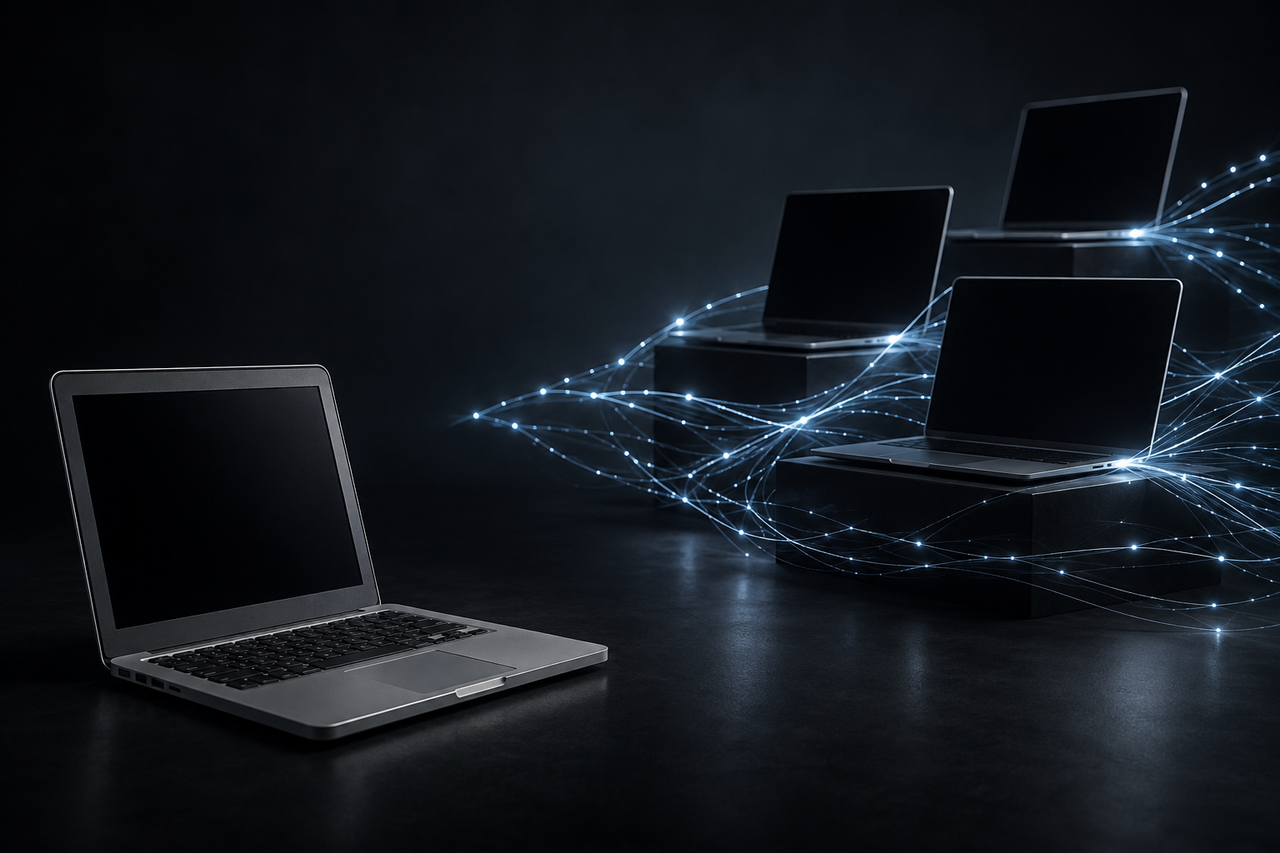
If you own an Intel Mac, you have probably noticed that the AI features Apple keeps demoing simply are not there for you. There is no toggle buried in Settings, no update that turns them on later. The line Apple has drawn runs straight through its own lineup, and it is not about how old your machine is or how well you have kept it. It is about the chip inside. That single fact is now doing quiet, measurable work on what an Intel Mac is worth when you go to sell it.
The dividing line is the chip, not the year
Apple Intelligence — the suite of writing tools, image features, notification summaries, and the smarter Siri — runs only on Apple Silicon. As Digital Trends lays out in its rundown of which Macs will and won't get the new AI features, every Mac with an M-series chip qualifies, and every Intel Mac is left out. It does not matter whether your Intel machine is a maxed-out 2020 model with plenty of memory; the neural hardware those features lean on is not in it.
There was some early confusion about exactly where the floor sat. At one point Apple's own marketing copy implied an M2 or newer requirement, which set off a small panic among M1 owners. As 9to5Mac reported, that was a wording issue rather than a policy — the piece walks through why, when Apple's website said Apple Intelligence requires an M2 Mac or later, there was no need to panic, because M1 machines were supported all along. The takeaway for sellers is simple: the meaningful split is Apple Silicon versus Intel, and Intel is on the wrong side of it.
What Intel owners are actually missing
It helps to be concrete about the gap, because "no AI" can sound abstract until you see the list. TechPP's roundup of Apple Intelligence supported devices across iPhones, Macs, and iPads shows the same clean cutoff on the Mac side — Apple Silicon in, Intel out — and it is the whole feature set that is gated, not a corner of it: the systemwide writing tools, the generative image features, the summaries, and the rebuilt Siri.
None of this means an Intel Mac stops working. It still browses, edits, and runs the apps it always did. But the features Apple is putting at the center of its marketing, and the ones buyers now ask about, are exactly the ones an Intel machine cannot offer. That is the part that shows up in resale conversations.
The cutoff is binary. An Intel Mac is not "a little behind" on Apple Intelligence — it gets none of it, by hardware design, with no path to change that through software. A buyer weighing an Intel machine against even an entry-level Apple Silicon one is comparing "no AI features ever" to "all of them."
Why a missing feature moves the resale needle
Used-Mac prices are set by what the next buyer believes they are getting. For years an Intel Mac and an early Apple Silicon Mac looked similar enough on a spec sheet that condition and configuration did most of the pricing work. Apple Intelligence changed the framing. Now there is a headline capability that one side of the lineup simply cannot deliver, and buyers increasingly treat it as a checkbox: does this machine get the features or not?
When the answer is no, an Intel Mac starts competing less with recent Apple Silicon models and more with other machines defined by what they can no longer do. That reframing tends to compress an Intel Mac's ceiling — not because the hardware degraded, but because the story a buyer tells themselves about it has shifted from "a Mac" to "the kind of Mac the new features skip."
Intel vs. Apple Silicon, at a glance
| Capability | Intel Mac | Apple Silicon Mac |
|---|---|---|
| Apple Intelligence writing tools | Not available | Available |
| Generative image features | Not available | Available |
| Rebuilt, smarter Siri | Not available | Available |
| Path to enable later via update | None | N/A — already supported |
| How buyers now frame it | "The Mac that skips the features" | "The Mac that gets them" |
What this means if you're thinking about selling
The honest read is that an Intel Mac's value is under gentle, ongoing pressure, and the direction is set. It will not reverse — the feature gap only widens as more of Apple's roadmap assumes the neural hardware Intel machines do not have. That does not make your Mac worthless or unusable; plenty of people still want a solid Intel machine for everyday work at the right price. It does mean that waiting is unlikely to help the number, and it often quietly hurts it.
If the AI cutoff is what is nudging you to move on, it is worth seeing where your machine stands before you decide. Encore gives you an instant online offer in about 30 seconds, a free prepaid, insured shipping label, and payment once the Mac arrives — and the offer you accept is the offer you are paid. It buys Intel machines and even broken units, so you are not stuck trying to convince a private buyer that a no-AI laptop is worth their trip across town. Encore will not always beat a flawless private sale on headline price, but it removes the hassle and the risk, and it takes the guesswork out of pricing a machine the market is actively re-rating. If you have an older pro laptop in particular, it is quick to see what it's worth as it is today rather than next quarter.
Get an instant offer on your Mac
A real number in about 30 seconds — working or not. Free prepaid shipping, no seller fees, paid the day it arrives.*
Get my offerSources
More from Encore
 Apple Silicon vs Intel
Your Intel Mac Still Works — How to Get the Most From It (or Move It)
Golden Gate dropped Intel Macs, but yours still has years left: how to keep it safe, useful, and worth something.
Sep 27, 2026 · 6 min read
 Apple Silicon vs Intel
T2 vs Apple Silicon: The Security Differences That Matter When You Buy or Sell
T2 Intel Macs and Apple Silicon Macs share the Secure Enclave and Activation Lock. Here's what to verify before a used deal.
Sep 25, 2026 · 7 min read
 Apple Silicon vs Intel
How Apple Quietly Hardened Activation Lock at the Hardware Level
Activation Lock lives in the Secure Enclave and boot chain, not macOS — which is why erasing a Mac never clears it. Here's how it really works.
Sep 24, 2026 · 7 min read