Sell Before or After You Buy the New Mac?
Selling your current Mac before the new one lands protects its value; selling after keeps you covered during setup. Here's how to time it — especially around a rumored launch.
Encore Editorial · Sep 12, 2026 · 6 min read
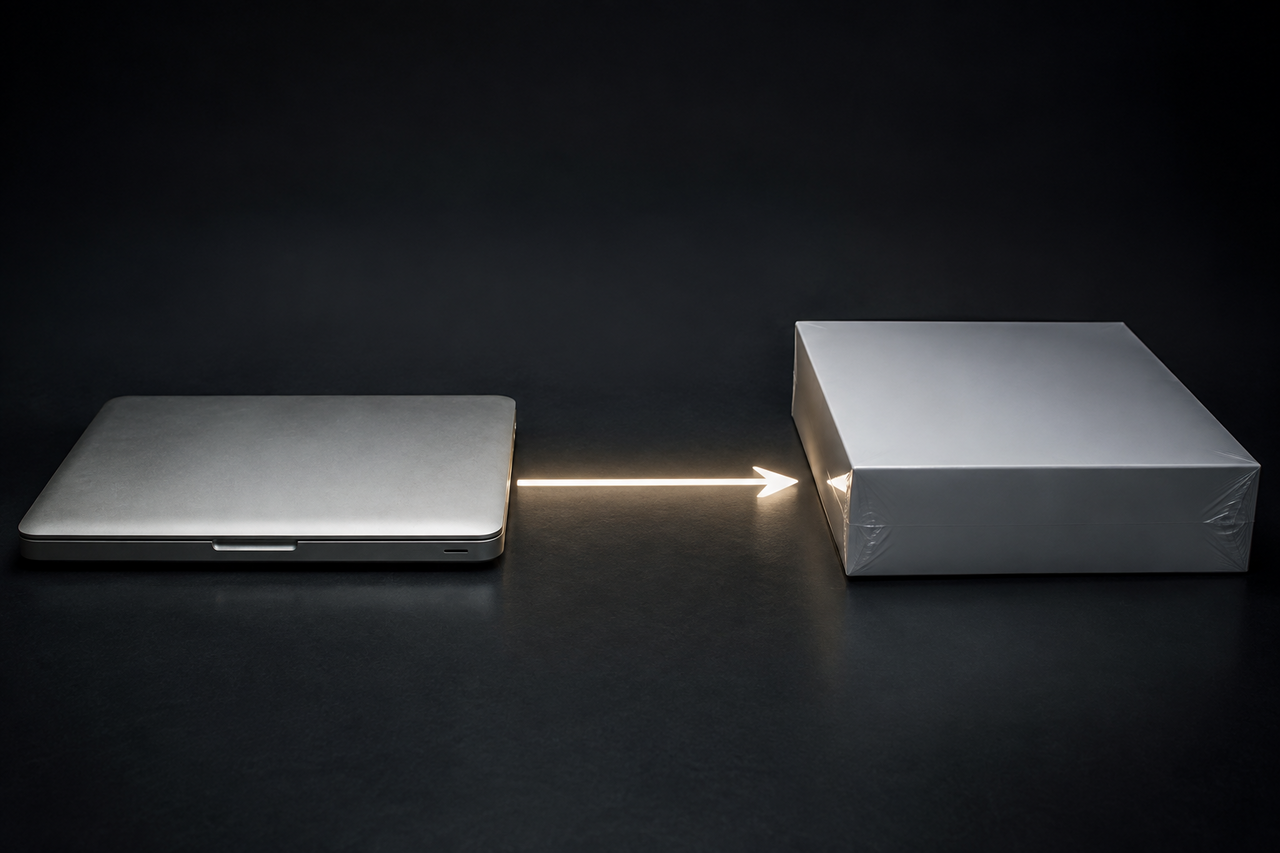
You're upgrading, and there's an awkward overlap to manage: for a while you'll either have two Macs or none. Selling the old one before the new one arrives keeps its resale value from slipping and puts money in hand toward the purchase — but leaves you without a machine during the gap. Selling after keeps you covered, at the cost of watching your old Mac age a little more while it sits on your desk. There's no universally right answer, but there is a right answer for your situation.
The case for selling before
The strongest argument for selling early is that a used Mac's value tends to erode fastest right when a newer model is fresh in buyers' minds. Once the successor is out and reviewed, the machine you're holding is visibly "last year's," and demand shifts. Selling before or right as the new model appears means you capture your Mac's value while it's still the current thing in most buyers' eyes.
The complication in 2026 is that the used market isn't behaving normally. Because new Macs got more expensive, demand for used and refurbished machines has jumped rather than sagged — Back Market reported that after Apple's price increases, refurbished MacBook demand surged more than 40% week over week. That's unusual: it means a well-kept older Mac can hold its value better than the typical depreciation curve would predict. Selling before still protects you from the launch-driven dip, but the floor under used prices is currently higher than sellers might assume.
Sell before to protect value; sell after to stay covered. Selling ahead of a new model captures your Mac's value before the launch-driven dip — and with used demand unusually strong right now, that value is holding up well. Selling after avoids any gap without a machine, but accepts a little more aging.
The case for selling after
Selling after the new Mac is in your hands solves the practical problems the "sell before" camp waves away. You migrate at your own pace, confirm the new machine has no defects before letting the old one go, and never lose access to your files, apps, or work mid-transition. For anyone whose Mac is their livelihood, that continuity is worth more than squeezing out the last increment of resale value.
The cost is time. Every week the old Mac sits unused, it's quietly depreciating and, in the fast-moving reality of 2026, exposed to a market that could shift. But that cost is usually modest compared to the risk of being stranded without a working computer because you sold too early and the new one shipped late or arrived faulty.
The rumor problem: waiting for what's next
Timing gets harder when the "new Mac" you're eyeing is rumored rather than real. There's persistent talk of an M6 MacBook Pro expected around fall 2026, and Macworld's own framing is the sane one: a faster machine is always coming, so waiting indefinitely means never buying. Treat rumored models as rumors — expected, not confirmed — and don't sell your current Mac into a gap based on a launch date that hasn't been announced. If you sell now betting a replacement ships next month and it slips, you're stuck.
A quick decision guide
| Your situation | Lean toward |
|---|---|
| Buying a Mac that's already available | Sell after it arrives and migrates cleanly |
| Your Mac is your main work machine | Sell after — protect continuity |
| You have a spare/second computer to bridge the gap | Sell before to capture value |
| You're waiting on a rumored model | Don't sell yet — the date isn't real until Apple says so |
| Your model's successor just launched | Sell promptly to beat the dip |
Shrinking the gap either way
Most of the "before vs. after" tension comes from how long the sale itself takes. A private listing can drag on for weeks — which is what turns "sell before" into a scary bet and "sell after" into an open-ended errand. If you can get paid quickly, the timing decision gets much smaller, because the window where you have two Macs or none shrinks to days.
That's the practical reason a fast, dedicated buyer helps here. With Encore you get an instant online offer in about 30 seconds, a free prepaid, insured shipping label, and payment once the Mac arrives — so you can line the sale up tightly with your upgrade instead of guessing how long a listing will sit. The accepted offer is what you're paid, it buys broken units too, and there's no stranger to meet or chargeback to worry about. It won't always beat a flawless private sale on headline price, but the speed is exactly what makes the timing question easy. When you're ready, it takes half a minute to see what your MacBook Pro is worth today and plan around a real number.
Get an instant offer on your Mac
A real number in about 30 seconds — working or not. Free prepaid shipping, no seller fees, paid the day it arrives.*
Get my offerSources
More from Encore
 Buying & Selling
How an Instant Mac Offer Actually Gets Priced
Model, configuration, condition, and live market comps: what goes into an instant Mac offer and why the number holds firm.
Sep 27, 2026 · 6 min read
 Buying & Selling
How Prepaid Labels and Escrow Protect Both Sides of a Mac Sale
A tracked, insured prepaid label plus pay-after-inspection payment removes the two biggest risks of selling a Mac remotely. Here's how the mechanism works.
Sep 26, 2026 · 6 min read
 Buying & Selling
The Real Risks of Selling Your Mac Locally for Cash
Fake payments, counterfeit bills, and unsafe meetups are the hidden costs of a local cash sale. Here's how to sell safely, or skip the risk entirely.
Sep 26, 2026 · 6 min read