Flexgate and Staingate: Old Display Defects That Still Hit Resale
What Flexgate and Staingate are, which MacBook Pros they hit, and how each one moves used value years after Apple's repair programs ended.
Encore Editorial · Sep 25, 2026 · 6 min read
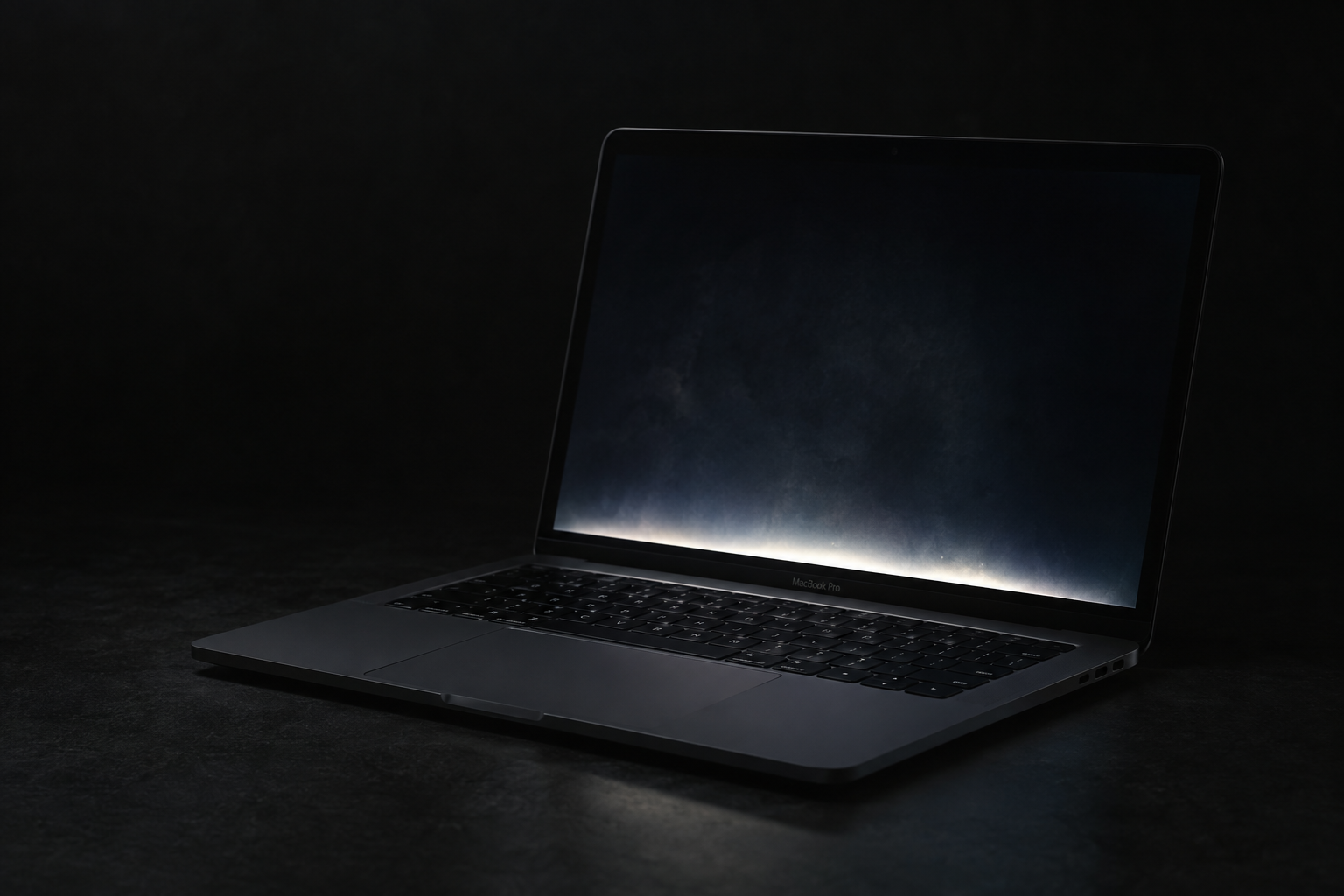
Two display defects from the Retina MacBook Pro era still shape what those machines are worth on the used market: Flexgate and Staingate. Neither is a scandal anymore — both are years old and well documented — but if you own, or are shopping for, a MacBook Pro from roughly 2015 through 2018, Flexgate and Staingate are the two failure modes most likely to move the price. Knowing which models are exposed, what the symptoms look like, and whether Apple ever covered them tells you most of what you need before you buy or sell one.
Flexgate: the display cable that wears out
Flexgate is a design-wear problem in the Touch Bar-generation MacBook Pro. To make the display thinner, Apple switched from sturdy wire cables to thin, fragile flex ribbons that connect the panel to its controller board. As iFixit explained when it diagnosed the issue, those ribbons are "subjected to the stress of bending with every opening and closure of the laptop," and because they are integrated into the display assembly, they "cannot be replaced" on their own.
The classic early symptom is the "stage light" effect — uneven bright patches along the bottom of the screen. iFixit found that the "backlight cable is generally the first to go, producing the infamous 'stage light' symptoms," with the display eventually cutting out entirely once the lid opens past roughly 40 degrees. The infuriating part is the repair math: because the cable is built into the panel, a worn ribbon that would otherwise be trivial to swap instead forces a full display replacement.
On models, MacRumors' Flexgate guide points at the 2016 and 2017 MacBook Pro, in both 13- and 15-inch sizes. The 2018 models "may also be impacted, but Apple did make flex cable changes to these machines" — reportedly lengthening the cabling by about two millimeters to reduce the strain. Apple's formal coverage was narrow: only the 13-inch 2016 MacBook Pro qualified for a free Backlight Repair Program, covering units sold from October 2016 to February 2018.
The short version: Flexgate is a display-cable wear defect on 2016–2018 MacBook Pros that forces a whole-panel repair; Staingate is anti-reflective coating that flakes off 2015–2017 Retina screens. Both hit resale value, both are checkable in seconds, and neither makes a machine worthless.
Staingate: the coating that flakes off
Staingate is the nickname for anti-reflective coating that wears away or delaminates on Retina displays, leaving cloudy blotches — often starting where the keyboard and palm rest touch the screen when the lid is closed. Apple ran a quiet repair program for it. Per MacRumors' reporting on that program, Apple authorized "free display repairs for eligible MacBook and MacBook Pro models with anti-reflective coating issues for up to four years after the affected notebook's original purchase date."
As of late 2019, the eligible list covered the 13-inch MacBook Pro (Early 2015 through 2017), the 15-inch MacBook Pro (Mid 2015 through 2017), and the 12-inch MacBook (Early 2015 through Early 2017). Models from 2014 and earlier had aged out, and no 2018-or-later machine was ever added. The practical takeaway in 2026: the four-year window has closed for essentially every affected model, so any Staingate you find now is out-of-warranty and yours to weigh.
Because delamination is a coating problem rather than a functional one, the display still works — it just looks marked. iFixit's grading standards even treat it as its own tier, classifying affected panels alongside cosmetically worn units "with the addition of delamination on the screen that does not interfere with visibility," in its cosmetic grading system. That framing is exactly right for resale: it is a looks issue, priced like heavy cosmetic wear, not like a dead machine.
How the two defects hit resale value
The two behave differently on the used market, and it is worth separating them:
- Staingate is cosmetic. A blotchy coating knocks a machine down the condition scale — think "fair" rather than "good" — but the Mac is otherwise fully usable, and some owners simply have the coating stripped. It reduces value without erasing it.
- Flexgate is functional. Once the stage-light effect or a dead backlight appears, the machine needs a display, and that repair is the expensive kind. A confirmed Flexgate failure pushes a unit into "needs repair" territory rather than any cosmetic grade.
- A clean bill of health cuts the other way. A 2016–2018 Pro with no cable symptoms and an intact coating is worth disclosing clearly, because buyers of these models are specifically watching for both problems.
Neither defect makes a MacBook Pro worthless. Machines with cosmetic delamination sell every day, and even a unit with an outright Flexgate failure has real value — for parts, for board-level work, or to a buyer who accepts the panel cost. If you have one and are not sure whether it is worth repairing before you move it, the fastest way to find out where it lands as-is is to describe the exact symptom and see what it's worth without committing to a repair first.
What to check before you buy or sell one
Both defects reveal themselves quickly:
- For Flexgate, open and close the lid slowly and fully, watching the bottom edge of the screen for flicker, banding, or bright "spotlight" patches as the hinge passes wide angles.
- For Staingate, put a solid white image on the display under good light and look for cloudy or rainbow-edged patches, especially in a keyboard-shaped pattern.
- Confirm the model year from the Apple menu under About This Mac, so you know which risks even apply.
- Assume no warranty coverage in 2026, since both Apple programs have expired for these machines.
The bottom line
Flexgate and Staingate are the two ghosts of the Retina MacBook Pro years, and they still show up in resale conversations for good reason. Staingate is a coating that flakes and dents value cosmetically; Flexgate is a cable that wears and can cost you a whole display. Check the lid through its full swing, check the screen against solid white, know your model year — and remember that even an affected machine is worth something to the right buyer. Disclose what you find, and the number takes care of itself.
Get an instant offer on your Mac
A real number in about 30 seconds — working or not. Free prepaid shipping, no seller fees, paid the day it arrives.*
Get my offerSources
More from Encore
 Repairs & Reliability
The Spinning-Disk iMac: Upgrade It or Sell It?
An SSD can transform a slow hard-drive iMac, but the glued display makes it tricky. Here's when to upgrade and when to just sell.
Sep 27, 2026 · 6 min read
 Repairs & Reliability
Liquid Damage Doesn't Always Total a Mac
A spill's real enemy is corrosion, not water. Why many liquid-damaged Macs are repairable — and still hold value if they aren't.
Sep 25, 2026 · 6 min read
 Repairs & Reliability
Is It Worth Replacing the Battery Before Selling Your Mac?
A worn Mac battery lowers an offer less than a replacement costs. Here's when to service it and when to disclose and sell as-is.
Sep 24, 2026 · 6 min read