The RAM Tax: Why Apple Charges So Much to Upgrade Memory
Apple's memory upgrades cost far more than the chips inside them — here's why, and why it quietly props up the resale value of high-RAM Macs.
Encore Editorial · Sep 4, 2026 · 6 min read
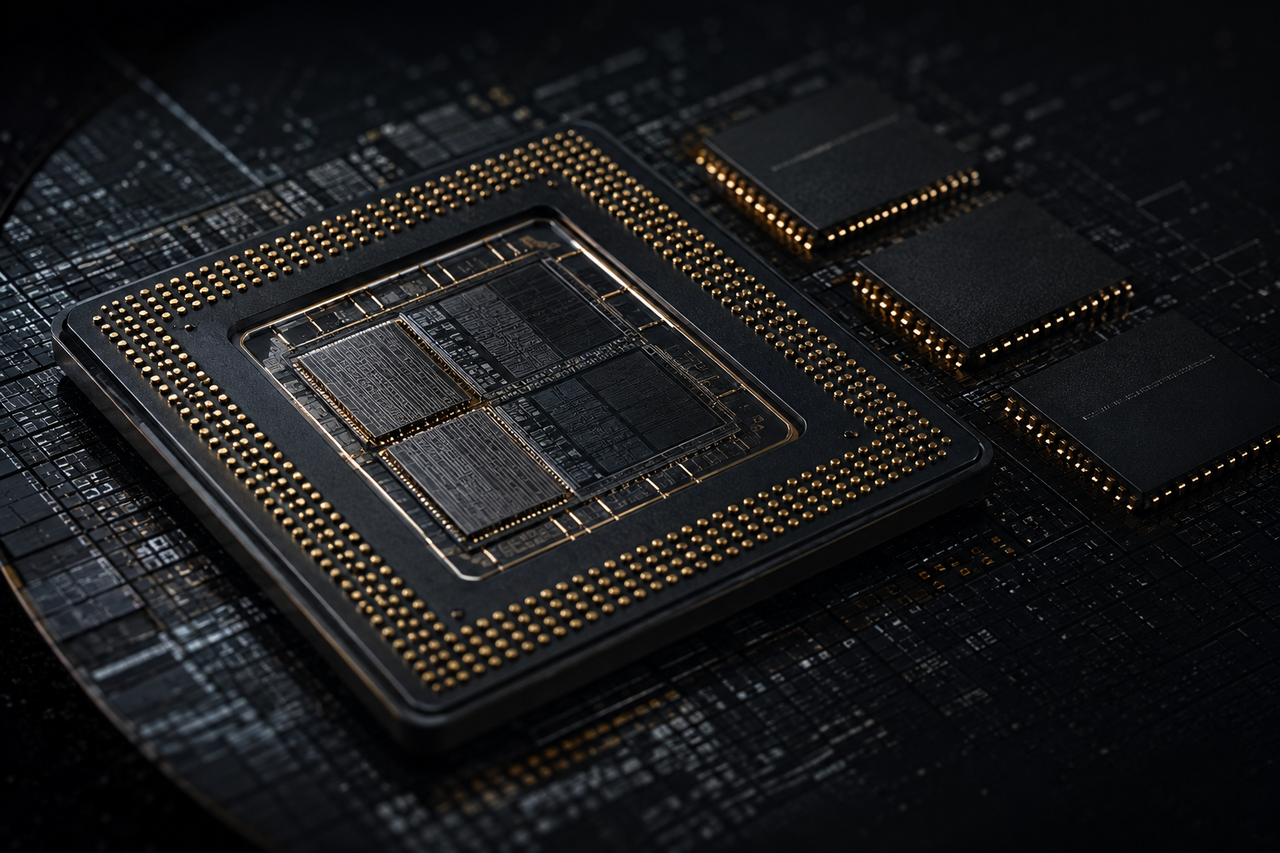
There is a moment familiar to anyone who has ever configured a Mac: you pick the model you want, then reach the memory dropdown and watch the price jump sharply for what looks like a very small number. That gap between what Apple charges for a memory upgrade and what the underlying chips actually cost is what buyers have come to call the RAM tax — and it is one of the most reliable, and most resented, lines on any Mac invoice.
The tax is real, the math behind it is not complicated, and it has a consequence most people never think about: it is a big part of why a used Mac configured with a lot of memory holds its value so unusually well.
What the RAM tax actually costs
Apple's upgrade pricing has been remarkably consistent. When the M3 MacBook Pro launched, moving from the base 8GB to 16GB of unified memory carried a steep fixed surcharge, and going to 24GB doubled it — the same tiers Apple used across the MacBook Air and iMac, as AppleInsider documented. Storage follows the same pattern. On the 15-inch MacBook Air, one breakdown found that each rung up the ladder — 256GB to 512GB, then 1TB, then 2TB — added another large fixed sum, with the top tier costing several times the first jump.
The friction comes from what those upgrades buy. Writing for Macworld and quoted by 9to5Mac, Jason Cross called 8GB "an insultingly miserly amount for this day and age" and argued that Apple charges a full upgrade tier's price for memory that costs it a small fraction of that, describing the markup as "pure corporate greed." 9to5Mac's own take was more measured but pointed the same direction: Apple could add the extra memory for only a few tens of dollars in cost, but doesn't, because most buyers will simply pay the upcharge. The storage story rhymes — that same SSD breakdown noted that a top-tier PC drive could be had for roughly a quarter of what Apple asks to move up its storage ladder.
The short version: Apple's memory and storage upgrades are priced on what the market will bear, not on what the components cost. Independent commentary has pegged the gap as a full upgrade tier's price charged for chips that cost a small fraction of that.
Apple's defense: "8GB is really 16GB"
Apple has not exactly hidden its reasoning. When the 8GB base drew criticism, VP of worldwide product marketing Bob Borchers offered a now-famous line in an interview reported by AppleInsider: "Actually, 8GB on an M3 MacBook Pro is probably analogous to 16GB on other systems." His argument rests on unified memory — the way Apple Silicon shares one fast memory pool across the CPU, GPU, and Neural Engine, plus aggressive memory compression, so a Mac can do more with a given amount of RAM than a traditional PC.
There is a kernel of truth to it. Unified memory genuinely is more efficient than the copy-everything-twice architecture of a discrete CPU and GPU. But "more efficient" is not the same as "twice as much," and the market seems to have agreed: by late 2024 Apple quietly moved every Mac it sells to a 16GB base — and, as XDA noted, it did so without raising prices, after years in which that same 16GB was a paid add-on "well above what you'd pay any other manufacturer."
Why you can't just add memory later
On most computers, an expensive factory RAM upgrade is annoying but optional — you can buy the cheap base model and add a memory stick yourself down the road. On a Mac, you cannot. Apple Silicon fuses the memory onto the same package as the processor, and an iFixit teardown of the first M1 machines showed exactly that: the RAM sits as separate dies mounted directly onto the chip package. iFixit explained the upside plainly — baking the memory in lets every part of the chip "access the same memory pool without having to copy or cache the data in more than one place" — but did not sugarcoat the downside, calling a design with no user-upgradeable memory "slightly devastating" and noting that upgradeable parts "can significantly prolong the lifespan of any computer."
That is the quiet leverage behind the whole pricing structure. Because the memory decision is permanent, Apple isn't selling you a component you might upgrade later — it is selling you the only chance you will ever get to have that much memory in that machine. Faced with a permanent choice, a lot of buyers spend up. That is the tax working as designed.
The resale twist most people miss
Here is where the RAM tax turns into an advantage — for owners, not Apple. Because memory can never be added after purchase, the supply of high-memory Macs is fixed on the day each one is built. Nobody is going to take a used 16GB machine and turn it into a 32GB one. So when someone wants a Mac with a lot of memory — a video editor, a developer, someone running AI models locally — they have exactly two options: pay Apple's upgrade tax on a new unit, or buy a used one that was already specced up.
That scarcity shows up directly in used prices. Consider what tends to hold value best on the secondhand market:
- High-RAM configurations. A used 32GB or 64GB Apple Silicon Mac is genuinely hard to replace cheaply, because the only new equivalent carries the full upgrade tax on top of an already-higher 2026 base price.
- Larger-storage models. The same logic applies to that steep top-tier 2TB jump — buyers who need the space will pay a premium for a used machine that already has it.
- Maxed-out "halo" builds. The more a machine cost to configure new, the more of that spend survives into its resale value, precisely because it cannot be replicated after the fact.
In other words, the money you handed Apple for that memory upgrade wasn't entirely spent — a meaningful chunk of it is stored in the machine, waiting to come back when you sell. If you bought up on RAM years ago and have been assuming the machine is "just old" now, that assumption is probably too pessimistic. A high-memory Apple Silicon Mac is one of the better-holding assets in consumer tech, and it takes about 30 seconds to see what yours is worth.
The bottom line
The RAM tax is exactly what it looks like: a premium priced on demand and on the fact that you can never change your mind. Apple's efficiency argument has some merit, but the pricing has always run well ahead of component cost, which is why the company could drop to a 16GB base without blinking on margin. For buyers configuring new, the lesson is to think hard before you skimp, because the choice is permanent. For anyone who already paid up — that permanence is quietly working in your favor, and a well-specced Mac you no longer use is worth more than the years on its clock suggest.
Get an instant offer on your Mac
A real number in about 30 seconds — working or not. Free prepaid shipping, no seller fees, paid the day it arrives.*
Get my offerSources
- 9to5Mac — M3 MacBook Pro reignites debate over 8GB RAM, and Apple memory pricing
- AppleInsider — Apple insists 8GB unified memory equals 16GB regular RAM
- iFixit — M1 MacBook Teardowns: Something Old, Something New
- AppleWorld.today — Apple's pricing for SSD storage upgrades on the Mac are ridiculous
- XDA Developers — Apple finally sees reason and upgrades all Macs to 16GB of RAM
More from Encore
 Market & Pricing
Is There a Best Time of Year to Sell a Mac?
The best time to sell a Mac is set by Apple's refresh cycle and your machine's age, not the season on the calendar.
Sep 27, 2026 · 6 min read
 Market & Pricing
Why the Internet Can't Agree on the MacBook Neo
The MacBook Neo splits reviewers between best budget laptop and just a tablet. The real divide is about which buyer they picture.
Sep 24, 2026 · 6 min read
 Market & Pricing
What Apple's Fall 2026 Lineup Means for the Used Mac Market
Apple's busy fall lineup resets the reference point for every used Mac. Here's how each launch wave moves resale values.
Sep 23, 2026 · 6 min read