What Apple's Fall 2026 Lineup Means for the Used Mac Market
Apple's busy fall lineup resets the reference point for every used Mac. Here's how each launch wave moves resale values.
Encore Editorial · Sep 23, 2026 · 6 min read

Apple's fall 2026 lineup is one of the busiest in years, and even the parts of it that have nothing to do with Macs will move the used Mac market. When the newest, shiniest hardware arrives, everything older on the shelf quietly gets recategorized in buyers' heads — and that reshuffling is exactly why a launch season is one of the better moments to think about what your current machine is worth.
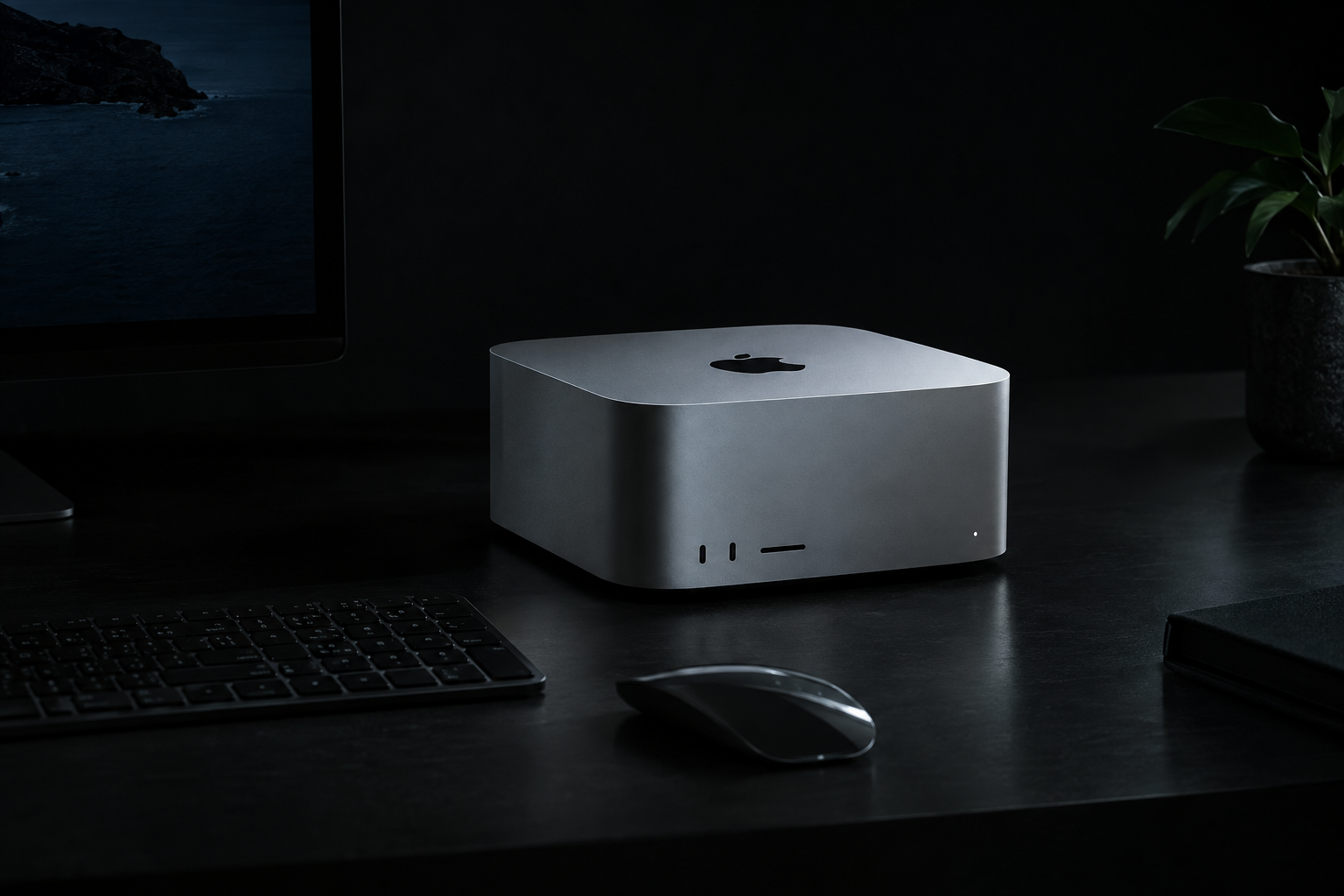
The headline act landed on September 9, when Apple showed the iPhone 18 Pro and Pro Max, a book-style foldable, and refreshed Apple Watch and AirPods models. As MacRumors recapped, no new Macs appeared at that event. But the Mac side of the fall has been unfolding on its own schedule: the Mac Studio with M5 Max and M5 Ultra began shipping on September 22, and Apple's roadmap points to more before the calendar turns.
Why the fall 2026 lineup ripples through the used Mac market
New hardware resets the reference point. The moment a faster machine ships, the model it replaces stops being "the current one" and becomes "last year's" — and its used value adjusts to match. This is not unique to Apple, but it is unusually orderly with Macs because Apple's release cadence is predictable and its lineup is small.
The effect is measurable. In its guide to buying a used Mac, AppleInsider notes that used MacBooks typically shed 20–30% of their value in the first year and then 10–15% a year after that, and that prices "fluctuate around new product launches and seasonal shopping periods." In other words, the curve is not smooth — it steps down around events like the one Apple just held, then again as each new Mac ships.
The short version: Every Apple launch nudges the whole used curve downward a step. If you already own a Mac you plan to part with, the strongest values are usually just before the replacement ships — not after it has been out for months.
What is actually coming to the Mac line
The fall 2026 Mac story is really three waves. The first has already arrived: the Mac Studio's jump to M5 Max and M5 Ultra silicon, which quietly repositions every earlier Studio and the aging Mac Pro beneath it. The second is near: according to MacRumors' roadmap reporting, a 14-inch MacBook Pro and a new iMac on Apple's 2-nanometer process are expected before year-end.
The third wave is the one worth watching if you own a MacBook Pro. Both MacRumors and 9to5Mac describe a redesigned, thinner MacBook Pro with an OLED touchscreen display arriving late 2026 or early 2027, built around M5 Pro and M5 Max chips. A ground-up redesign is a bigger deal for resale than a routine chip bump, because it makes the outgoing shape look dated overnight rather than gradually.
Even the products that are not Macs feed the same current. Apple's September event, and the run-up coverage from 9to5Mac, kept Apple hardware in the headlines for weeks. That attention pulls shoppers into the ecosystem, and a meaningful share of them are looking for a capable machine without paying this year's new prices — which is precisely the demand that keeps used Macs liquid.
Why used Macs hold up through all of this
A launch season would be bad news for resale if Macs depreciated like ordinary laptops. They do not. As Macworld puts it, "the depreciation of Apple devices in general and MacBooks, in particular, is not nearly as high as with Windows PCs," and a well-kept MacBook can deliver "a lifespan of eight to 10 years." Long software support, strong build quality, and steady secondhand demand all cushion the drop.
Apple Silicon has widened that gap. Machines built on M-series chips stay fast and supported for years, so an older Apple Silicon Mac still does real work when the next generation lands. AppleInsider's blunt version: even a several-year-old Apple Silicon machine "can still feel fast." That durability is why a launch dents used values by a step rather than a cliff.
The one caveat is Intel. With Intel Macs now aged out of the newest macOS, their curve is steeper than Apple Silicon's, and a fall full of new hardware accelerates that. If you are holding an Intel machine, time is less on your side than it is for M-series owners.
What this means if you own a Mac right now
The practical takeaways from a busy launch season are straightforward:
- Sell before the replacement ships, not after. Values are firmest while your model is still the current one. Waiting until the redesign is on shelves means selling into the dip.
- Know which wave hits your model. A new Mac Studio pressures older Studios and Mac Pros first; the redesigned MacBook Pro will pressure existing Pros hardest.
- Apple Silicon can wait a beat; Intel cannot. M-series machines hold value through a launch; Intel models keep sliding as support winds down.
- Condition and spec still dominate. A launch moves the whole curve, but memory, storage, and cosmetic condition decide where on that curve your specific machine sits.
None of this requires guessing at a number in your head. Values shift week to week around events like this, so the only figure that matters is the one attached to your exact model, configuration, and condition today. If you are curious where your machine sits after this launch cycle, an instant offer takes about thirty seconds — and because the offer is the offer, it does not change once the unit arrives.
The bottom line
Apple's fall 2026 lineup does more than sell new phones and watches. It resets the reference point for every used Mac on the market, wave by wave — the Mac Studio first, a new MacBook Pro and iMac next, and a redesigned Pro on the horizon. Used Macs weather that better than almost any other computer, but the pattern is consistent: the best moment to move an older machine is while it is still the current one, before the next launch quietly marks it down a step.
Get an instant offer on your Mac
A real number in about 30 seconds — working or not. Free prepaid shipping, no seller fees, paid the day it arrives.*
Get my offerSources
- MacRumors — Apple September 2026 event recap
- 9to5Mac — Apple will launch six major new products next week
- MacRumors — Apple's Mac roadmap for 2026 and 2027
- 9to5Mac — Apple's huge Mac roadmap revealed in new report
- AppleInsider — How to buy a used Mac and not get ripped off
- Macworld — Why MacBooks hold their value
More from Encore
 Market & Pricing
Is There a Best Time of Year to Sell a Mac?
The best time to sell a Mac is set by Apple's refresh cycle and your machine's age, not the season on the calendar.
Sep 27, 2026 · 6 min read
 Market & Pricing
Why the Internet Can't Agree on the MacBook Neo
The MacBook Neo splits reviewers between best budget laptop and just a tablet. The real divide is about which buyer they picture.
Sep 24, 2026 · 6 min read
 Market & Pricing
The M5 Ultra Mac Studio Just Shipped — What It Does to Used Studios and Mac Pros
The new M5 Ultra Mac Studio slides demand down to older Studios and the Mac Pro. Here's the ripple for buyers and sellers.
Sep 23, 2026 · 6 min read