Why Apple's Squeezed Margins Keep Used Macs Expensive
Apple guided its holiday-quarter gross margin lower, citing memory and AI costs. Thinner margins leave little room to cut new Mac prices — so the used market stays firm.
Encore Editorial · Nov 6, 2026 · 4 min read
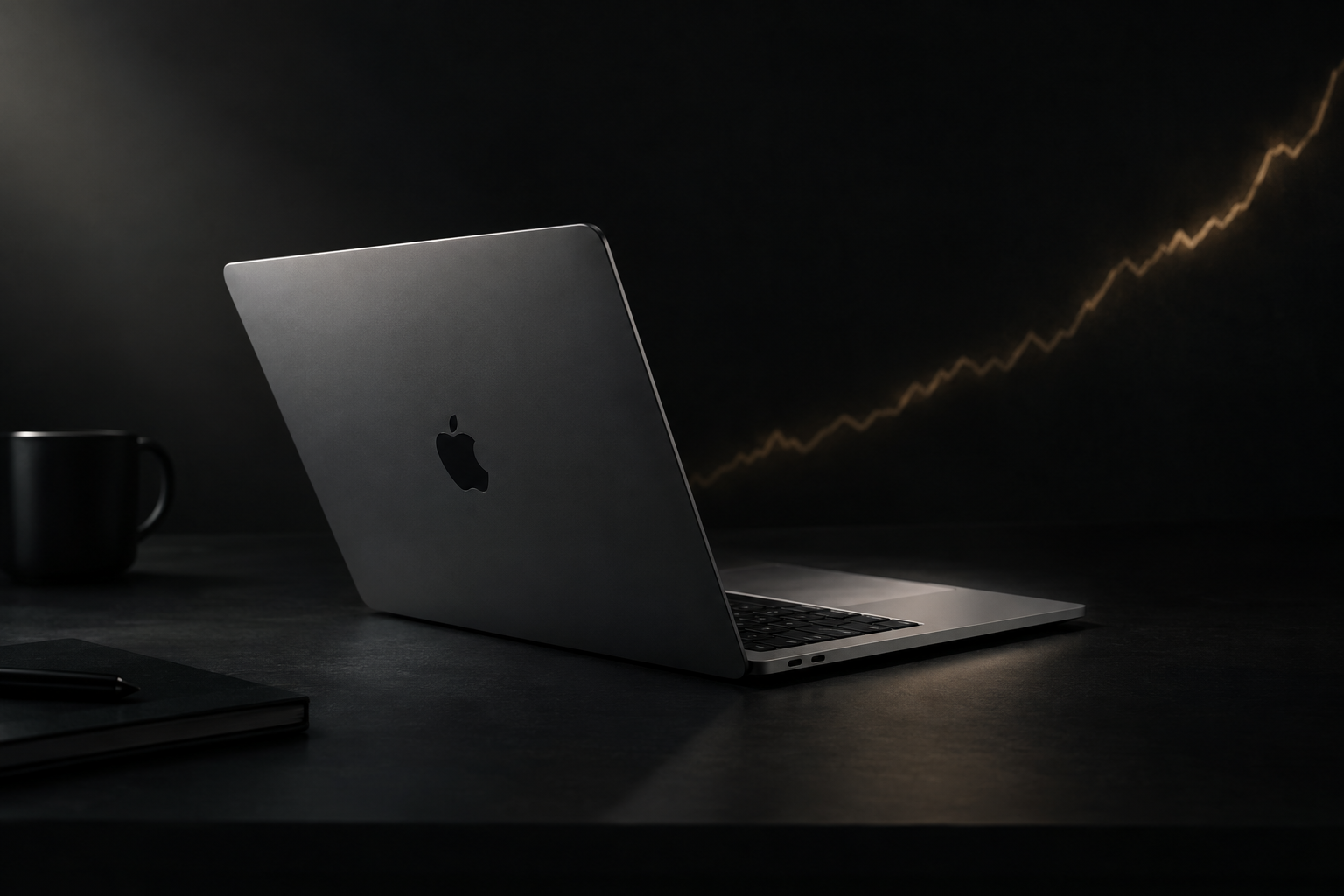
Here is a piece of corporate accounting that lands, oddly enough, in the pocket of anyone selling a used Mac: Apple's profit margins are getting squeezed. On its November 2026 earnings call, Apple guided its holiday-quarter gross margin lower and blamed rising memory costs and the expense of ramping up its new Siri AI. That squeeze is exactly why used Macs stay expensive — because a company earning thinner margins has very little room to cut the price of a new Mac, and the used market takes its cue from the new one. If you've wondered why your older machine isn't depreciating the way it "should," Apple's margin math is a big part of the answer.
What Apple actually told investors
Start with the numbers Apple gave for the quarter ahead. As Fortune reported, Apple guided December-quarter gross margin to a range of 45 to 46 percent, down from the quarter it had just finished, and attributed the drop to rising memory costs plus the cost of ramping its Siri AI service. CNBC's coverage noted the just-ended quarter came in at 47.9 percent, and that the forward guidance landed below what Wall Street had penciled in — enough that the stock dipped after hours before recovering.
A couple of percentage points of gross margin may sound like accounting trivia. For a hardware company Apple's size, it isn't. Margin is the cushion between what a Mac costs to build and what it sells for, and that cushion is where any future price cut would have to come from.
Thin margins mean no room to cut
This is the mechanism that matters for sellers. When a company's margins are fat, it can afford to discount — to run promotions, trim prices on last year's model, or absorb a cost increase without passing it on. When margins are already being compressed by component costs, that flexibility disappears. Every dollar Apple might shave off a new Mac's price comes straight out of a margin it is already telling investors is under pressure.
And the pressure is specific. CNBC noted Apple said memory costs were higher than in the June quarter, only partly offset by inventory and lower non-memory component costs. CNBC also reported Ternus said Apple had "reluctantly" raised prices to help offset those component costs — the June increase across nearly its whole lineup. A company that reluctantly raised prices once, and is now guiding margins down anyway, is not a company poised to make new Macs cheaper.
The short version: Apple's holiday-quarter margin guidance of 45–46 percent, down on higher memory and AI costs, signals it has almost no slack to cut new Mac prices soon. With the new-Mac price floor stuck high, used Macs have nothing pulling their values down — so they stay firm.
Why the used market follows the new one
Used prices are not set in a vacuum. The ceiling on what a used Mac can fetch is the cost of the equivalent new one. When that new price holds high — because Apple can't afford to discount into a margin squeeze — the used machine below it keeps its value, and a shopper comparing the two increasingly finds the used unit the rational buy. That dynamic is the engine behind why used Mac prices have been rising in 2026; the margin story is simply the reason it isn't about to reverse.
There's a second layer in Apple's own comments. MacRumors' rundown of the call noted Apple expects Mac supply to be constrained in the December quarter, mainly because of memory, as demand has outrun expectations. Constrained new supply plus steady or rising demand is a textbook recipe for firm prices — and some of that demand spills directly into the used market, where buyers who can't get, or can't justify, a new machine go looking for an alternative.
What it means if you're thinking of selling
You don't need to forecast Apple's margins to act on this. The practical read is straightforward:
- The price support is unusually durable. Unlike a one-off shortage headline, a margin squeeze is something Apple has guided investors to expect for at least the coming quarter — meaning little downward pressure on new, and therefore used, prices in the near term.
- It still isn't permanent. If memory costs ease and margins recover, Apple regains room to discount, and normal depreciation resumes. The window is favorable now, not forever.
- Condition and timing still decide your number. A firm market lifts the floor, but a worn battery, cosmetic damage, or a looming macOS cutoff still pulls against you. A machine you've stopped using loses more by waiting than it gains.
If you want to turn that firm market into an actual figure for your Mac, the fastest route is to skip the forecasting entirely and get an instant offer that already reflects today's conditions. It takes about thirty seconds, comes with a prepaid, insured label, and the number you accept is the number you're paid.
The bottom line
Apple's thinner margins are a problem for Apple's shareholders and a quiet advantage for Mac sellers. When the company that sets the price of new Macs tells the market it has almost no room left to cut, the used machines priced just beneath them stay valuable. If you've been holding an older Mac expecting it to be nearly worthless, the margin math says otherwise — and it's worth checking your MacBook Air or any other model against a live offer while the market is on your side.
Get an instant offer on your Mac
A real number in about 30 seconds — working or not. Free prepaid shipping, no seller fees, paid the day it arrives.*
Get my offerSources
More from Encore
 Market & Pricing
The Quiet Used-Mac Supply Crunch Behind the Prices
Firm used-Mac prices aren't only about more buyers. Owners are keeping their Macs longer, thinning the supply of good used machines and rewarding anyone who has a clean one to sell.
Nov 10, 2026 · 5 min read
 Market & Pricing
Why Trade-In Values Lag When Mac Prices Rise
Big trade-in programs reprice in slow, cautious steps. When the open market firms up, their quotes fall behind — and a cash offer can track today's prices far faster.
Nov 9, 2026 · 4 min read
 Market & Pricing
Black Friday 2026: Sell Your Old Mac, or Hold?
The holiday rush is when people buy a new Mac and have an old one to offload. In a memory-driven price market, here's whether to sell before, during, or after the season.
Nov 8, 2026 · 4 min read