Why a Used M-Series Mac Is a Smarter Buy Than a New One Right Now
New-Mac prices jumped in 2026 as the memory shortage bit — which makes a used Apple Silicon Mac unusually good value, and yours worth more than you think.
Encore Editorial · Sep 3, 2026 · 6 min read
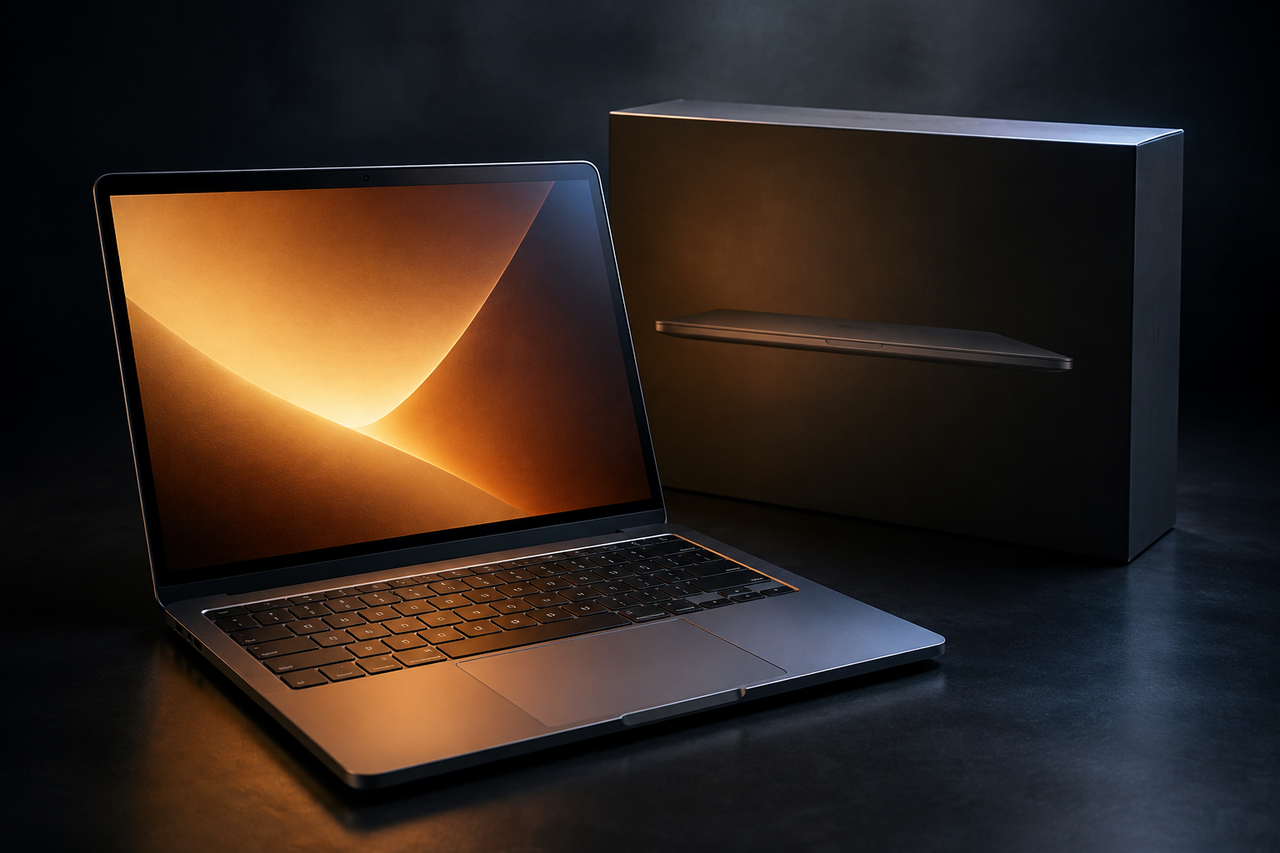
For most of the past decade, the standard advice on Macs was simple: buy new, buy once, keep it for years. That advice is quietly breaking down. In 2026, with new-Mac prices climbing on the back of a global memory shortage, a used M-series Mac has become one of the best values in consumer technology — and if you already own one, it has quietly become a more valuable asset than the calendar suggests.
The case rests on two things happening at the same time: new machines are getting more expensive, and used Apple Silicon Macs are aging remarkably well. Put those together and the gap between "new" and "nearly as good, for much less" has rarely been wider.
New Macs got noticeably more expensive
This is not a vibe; the numbers moved. In June 2026, Apple raised list prices across the Mac line — the MacBook Air's starting price climbed to a new high, and the M5 MacBook Pro's entry point rose alongside it, as 9to5Mac reported. Tim Cook framed the increases as "unavoidable" given the cost of memory and storage.
Apple is not alone, and it is not the worst-hit. Earlier in the year, MacRumors relayed analysis warning that surging memory and CPU costs could push mainstream laptop retail prices up by nearly 40% in 2026, with DRAM and SSD — normally around 15% of a device's bill of materials — ballooning to over 30%. When the entire industry reprices upward, the reference point for "what a good computer costs" moves with it, and every used machine on the market instantly looks like a better deal against a higher new-price anchor.
The short version: New Macs cost meaningfully more in 2026 than they did a year earlier. That doesn't just raise the price of buying new — it raises the value of every capable used Mac measured against it.
Apple Silicon ages unusually well
A price gap only matters if the cheaper option is genuinely good. Here, Apple Silicon has a real story. In a December 2025 buyer's guide, AppleInsider called Apple Silicon Macs "the best choice for most buyers," noting they "offer much longer battery life and performance, stay quiet under load, and will receive software support for many more years than Intel models." Its blunt summary: "Even a five-year-old MacBook Air can still feel fast."
That is not marketing optimism. Writing for 9to5Mac, one editor explained why buying a five-year-old M1 MacBook Air made more sense than a new M4: for writing, email, and browsing, "any Apple Silicon MacBook Air is good enough," and the older machine could still be "resold for roughly half its original price" — so paying up for the newest model simply wasn't justified. The original M1 launched in 2020 and is still a perfectly usable computer in 2026, which is not something you could often say about a five-year-old laptop.
Longevity is the throughline. As Macworld has noted, MacBooks depreciate far more slowly than Windows PCs, and Apple's combination of long macOS support plus additional years of security updates gives many machines a realistic "lifespan of eight to 10 years." A computer that stays useful for a decade is a computer worth buying used — and worth holding onto until you're ready to pass it on.
The unified-memory catch that helps used buyers
There is one wrinkle worth understanding before you buy either new or used: Apple Silicon memory is soldered onto the chip and cannot be upgraded afterward. As AppleInsider explains, "there's no way to upgrade the RAM later, except to replace the CPU" — "when you buy an Apple Silicon Mac, you're stuck with whatever RAM size you initially ordered."
That sounds like a reason to buy new, so you can configure exactly what you want. In practice it cuts the other way for value shoppers. Because memory is fixed for life, a used Mac that was originally specced with 16GB, 32GB, or more already carries that expensive upgrade baked in — you get it without paying Apple's steep 2026 upcharge on a new configuration. The trick is simply to buy the right spec used, rather than the cheapest one.
What to check before you buy used
Buying used well means doing a little homework. A few things worth confirming:
- Activation Lock is off. AppleInsider specifically flags this: modern Macs tie to an Apple ID through Find My, so make sure the seller has fully signed out and removed the machine from their account.
- Get the memory you'll actually need. Since RAM can't be added later, lean toward 16GB or more, and higher if you edit video or run heavier workloads.
- Check battery health and physical condition. These are the parts that age, and they're easy to inspect in Settings or in person.
- Prefer Apple Silicon over Intel. The longer support window and better efficiency make M-series the safer long-term buy.
The flip side: your current Mac is worth more than you think
Everything above is good news for buyers. It's also good news for the person on the other side of the transaction. The same forces lifting used values — higher new prices, slow depreciation, fixed memory that can't be added after the fact — mean the Mac sitting in your closet is probably worth more today than the "it's a few years old now" math in your head assumes.
Older Apple Silicon in particular is being propped up by a market where the alternative keeps getting pricier. If you've upgraded and have a previous machine gathering dust, this is an unusually favorable moment to move it while values are firm — an instant offer takes about 30 seconds, and these windows tend to close once component supply loosens up again.
The bottom line
The 2026 price environment has tilted the math. New Macs are more expensive than they were, used Apple Silicon stays fast and supported for years, and the memory you can't upgrade later is exactly what makes a well-specced used machine so appealing. For buyers, that's a rare chance to get most of the experience for much less. For owners, it's a reminder that the value in your current Mac hasn't drained away — and there's rarely been a better time to see what it's worth.
Get an instant offer on your Mac
A real number in about 30 seconds — working or not. Free prepaid shipping, no seller fees, paid the day it arrives.*
Get my offerSources
- 9to5Mac — Apple announces significant price increases for MacBooks, iPads, more
- MacRumors — Apple Holds an Edge as Laptop Prices Could Face a 40% Increase
- AppleInsider — How to buy a used Mac and not get ripped off
- 9to5Mac — Buying a five-year-old MacBook Air was the right decision for me
- AppleInsider — Why Apple uses integrated memory in Apple Silicon, and why it's both good and bad
- Macworld — 6 reasons to buy a MacBook instead of a PC laptop
More from Encore
 Market & Pricing
Is There a Best Time of Year to Sell a Mac?
The best time to sell a Mac is set by Apple's refresh cycle and your machine's age, not the season on the calendar.
Sep 27, 2026 · 6 min read
 Market & Pricing
Why the Internet Can't Agree on the MacBook Neo
The MacBook Neo splits reviewers between best budget laptop and just a tablet. The real divide is about which buyer they picture.
Sep 24, 2026 · 6 min read
 Market & Pricing
What Apple's Fall 2026 Lineup Means for the Used Mac Market
Apple's busy fall lineup resets the reference point for every used Mac. Here's how each launch wave moves resale values.
Sep 23, 2026 · 6 min read