Memory Shortage Is Driving Up Prices for the M4, M5, and M6 Mac Series
A global RAM crisis born in AI data centers has reached the price of every Mac — and it's quietly lifting what used Apple Silicon machines are worth.
Encore Editorial · Sep 4, 2026 · 7 min read
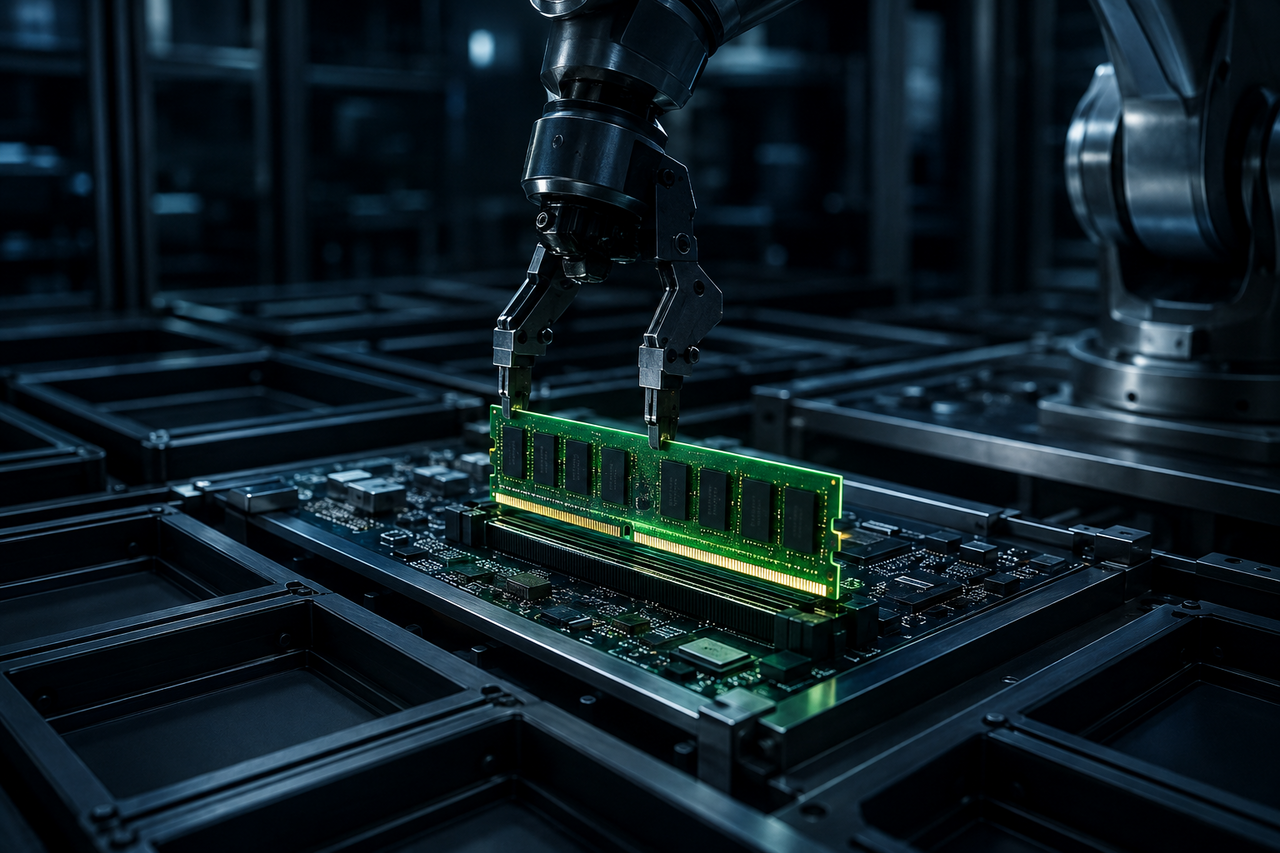
If a new Mac feels more expensive than it did a year ago, you are not imagining it. A global memory shortage — the worst the industry has seen in years — has pushed the cost of the RAM and storage inside every Mac sharply higher, and Apple has started passing those increases on to buyers. For anyone holding an M1, M2, M3, or M4 Mac, the same forces are quietly doing something else: propping up what your current machine is worth on the used market.
Here is what is actually happening, why it reaches all the way up through the M4, M5, and next-generation M6 lineup, and what it means if you are thinking about selling.
RAM prices didn't just rise — they multiplied
This is not the usual seasonal wobble in component costs. According to AppleInsider's tracking of the market, the price of DDR5 memory roughly sextupled between February 2025 and August 2026 — a pair of 16GB sticks that was once one of the cheapest upgrades you could buy now costs several times what it did. Solid-state storage is up roughly three-fold over the same window, and even spinning hard drives have about doubled.
The cause has almost nothing to do with laptops. Hyperscale data centers building out AI infrastructure are consuming enormous quantities of high-bandwidth memory (HBM), which earns memory makers several times the profit per gigabyte that consumer DRAM does. So Samsung, SK Hynix, and Micron have steered their limited factory capacity toward HBM — and the DRAM that ends up in a Mac is what's left over. The market analysts at IDC describe it as a structural crisis reshaping the entire PC and smartphone market for 2026, not a blip.
The short version: AI servers are eating the world's memory supply. Consumer devices are competing for the scraps, and prices reflect it.
Apple said the quiet part out loud
Apple spent years insulated from memory swings by long-term supply contracts. That cushion has worn thin. In a June 2026 interview, Tim Cook told the Wall Street Journal — as reported by 9to5Mac — that the company can no longer absorb the hit:
"There's less supply at a time when consumers want devices and the memory guys are passing along huge price increases … Unfortunately, price increases are unavoidable."
That candor is unusual for Apple, and it tells you how severe the squeeze is. It has already shown up in the lineup: high-memory Mac mini and Mac Studio configurations were temporarily pulled from sale, and the M5-generation Mac Studio was conspicuously absent from WWDC 2026 — a launch delay widely attributed to memory allocation rather than engineering.
Why this reaches the M4, M5, and M6 alike
Every Apple Silicon Mac uses unified memory — RAM fused onto the same package as the chip. That design is fast, but it has a consequence that matters enormously right now: you cannot upgrade it later. The memory you buy at checkout is the memory you keep for the life of the machine.
When base memory costs jump, Apple's options are to raise prices, hold the line and eat the margin, or quietly trim what a given price buys. Across the M4 (shipping now), the M5 (rolling out through 2026), and the M6 generation on the horizon, the memory bill of materials is higher than it was when the M1 and M2 launched — so the pressure runs straight up the entire lineup. As Macworld put it, the only real question was how long Apple could hold out before consumers felt it.
Don't expect relief soon
The people who make the memory are blunt about the timeline. Micron's CEO said the company has "no line of sight as to when memory supply will be able to catch up with increasing demand." SK Hynix's chief called the coming year potentially "the worst year in the industry's history from the supply perspective," and Samsung expects constraints to worsen into 2027. Memory makers have reportedly already sold out their entire 2027 production capacity, and building new fabs takes three to five years. Most forecasts don't see meaningful price relief before 2028.
What it means if you own a Mac right now
Here is the part that gets overlooked. When new machines get more expensive and specific configurations get scarce, the used market becomes the pressure-release valve. Three effects are worth understanding:
- High-RAM Macs are the new prize. Because memory is fixed at purchase, a used 32GB, 64GB, or 128GB Apple Silicon Mac is now genuinely hard to replace at its original price. Those configurations are holding value better than almost anything else in tech.
- The gap between new and used narrowed. Every dollar Apple adds to a new Mac makes a comparable used one look like a better deal — which lifts demand, and prices, on the secondhand side.
- Older Apple Silicon aged gracefully. An M1 or M2 machine that would normally be well into its depreciation curve is being held up by a market where the alternative — buying new — keeps getting pricier.
Translation: your Mac is very likely worth more today than the "it's a few years old" math in your head assumes. That is unusual. Technology almost never appreciates, and these windows tend to close once supply catches up.
If you've been putting off selling a Mac you no longer use, this is an unusually good moment to find out what it's worth. An instant offer takes about 30 seconds — and if the number's good, prices this firm are not guaranteed to last into the next supply cycle.
The bottom line
A memory shortage born in AI data centers has worked its way down to the price tag on a MacBook, and Apple has confirmed it isn't going away quietly. New Macs will keep getting pricier, high-memory configurations will stay scarce, and the used market will keep absorbing the overflow. For buyers, that's a squeeze. For anyone sitting on a Mac they're ready to part with, it's the rare moment when waiting probably costs you money rather than saving it.
Get an instant offer on your Mac
A real number in about 30 seconds — working or not. Free prepaid shipping, no seller fees, paid the day it arrives.*
Get my offerSources
- AppleInsider — The world's RAM supply crisis is going to get worse before it gets better
- 9to5Mac — Apple confirms price increases are coming due to RAM shortage
- Macworld — RAM prices are out of control. When should Apple users start worrying?
- IDC — Global Memory Shortage Crisis: Market Analysis and the Potential Impact in 2026
More from Encore
 Market & Pricing
Is There a Best Time of Year to Sell a Mac?
The best time to sell a Mac is set by Apple's refresh cycle and your machine's age, not the season on the calendar.
Sep 27, 2026 · 6 min read
 Market & Pricing
Why the Internet Can't Agree on the MacBook Neo
The MacBook Neo splits reviewers between best budget laptop and just a tablet. The real divide is about which buyer they picture.
Sep 24, 2026 · 6 min read
 Market & Pricing
What Apple's Fall 2026 Lineup Means for the Used Mac Market
Apple's busy fall lineup resets the reference point for every used Mac. Here's how each launch wave moves resale values.
Sep 23, 2026 · 6 min read